
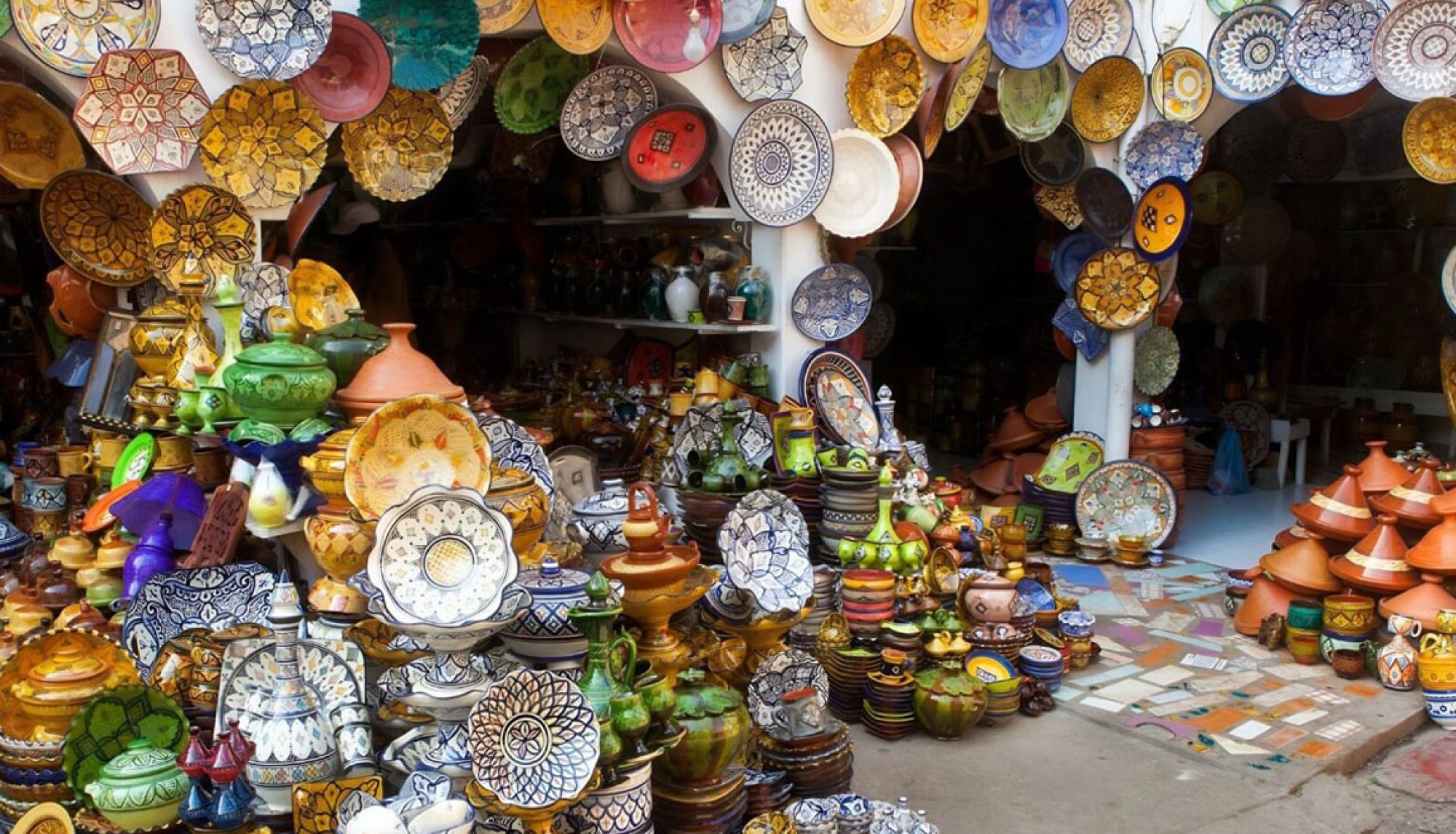
You're wandering through the souks of Marrakech or Safi when, around a bend in an alley, you spot a potter sitting at his wheel. His hands shape the clay with unsettling fluidity, and in a few seconds, a bowl takes form before your eyes. This is the moment when Moroccan pottery stops being a simple travel souvenir and becomes something much bigger: a thousand-year-old craft, a living tradition, a window onto the soul of Morocco. In this article, we invite you to discover the history of this craft, the regions of Morocco where it is most practiced, the techniques used to make it and everything you need to know to find a beautiful authentic piece or, even better, to shape one yourself.
History and Origins of Moroccan Pottery
Pottery in Morocco is among the oldest craft traditions in the country. Long before the arrival of Islam, the Berber peoples were already shaping clay into storage jars, cooking vessels and ritual objects. Terracotta was everywhere in Moroccan homes: it kept water cool during the heat of summer, it was used to cook tagine slowly over embers, and it stored olive oil and honey. Moroccan pottery as we know it today is the fruit of a fascinating blend of that original Amazigh heritage and the contributions of Arab-Andalusian civilization, notably the glaze, color and geometric sophistication that Andalusian artisans brought during their forced exile in the 15th century. From Fez to Safi, from Tamegroute to Marrakech, each region has since developed its own style, its own clay, a visual identity that belongs only to it. Let's discover the different styles of Moroccan pottery together!
Fez Pottery: Blue Glazed Ware with Geometric Patterns
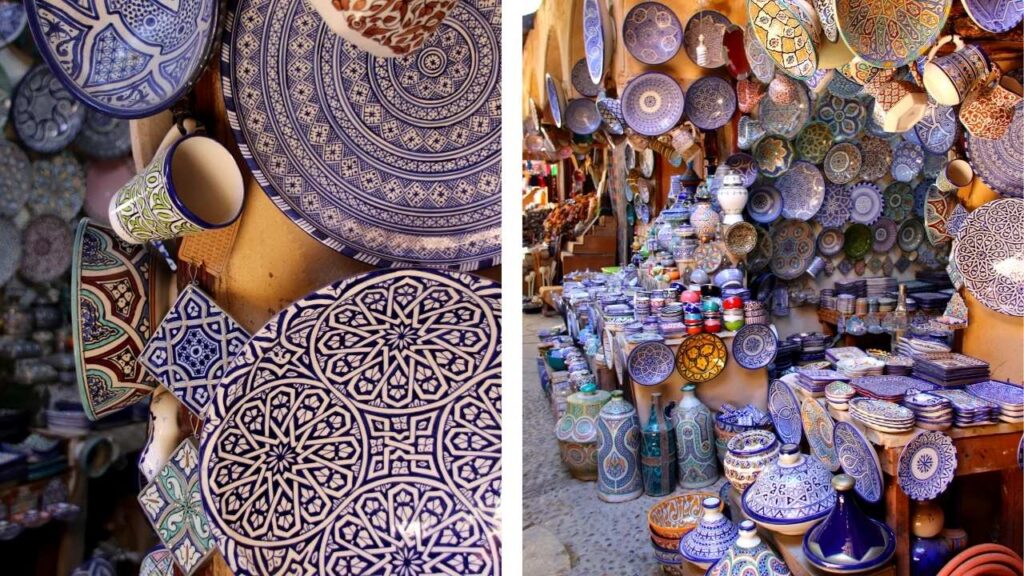
This is probably the best known of the types of pottery in Morocco, and it's easy to see why. You recognize Fez pieces immediately: a creamy white background, with geometric or floral patterns drawn in deep cobalt blue (sometimes complemented with ocher, green or brown), and a shiny glaze that gives them an almost precious look. This aesthetic is directly inherited from the Andalusian tradition: the artisans who fled Granada and Cordoba settled in Fez and founded this unique style there. Fez pottery today adorns the most beautiful riads in the country, and its zellige tiles are its natural extension.
Safi Pottery: The National Capital, Unglazed Red Clay
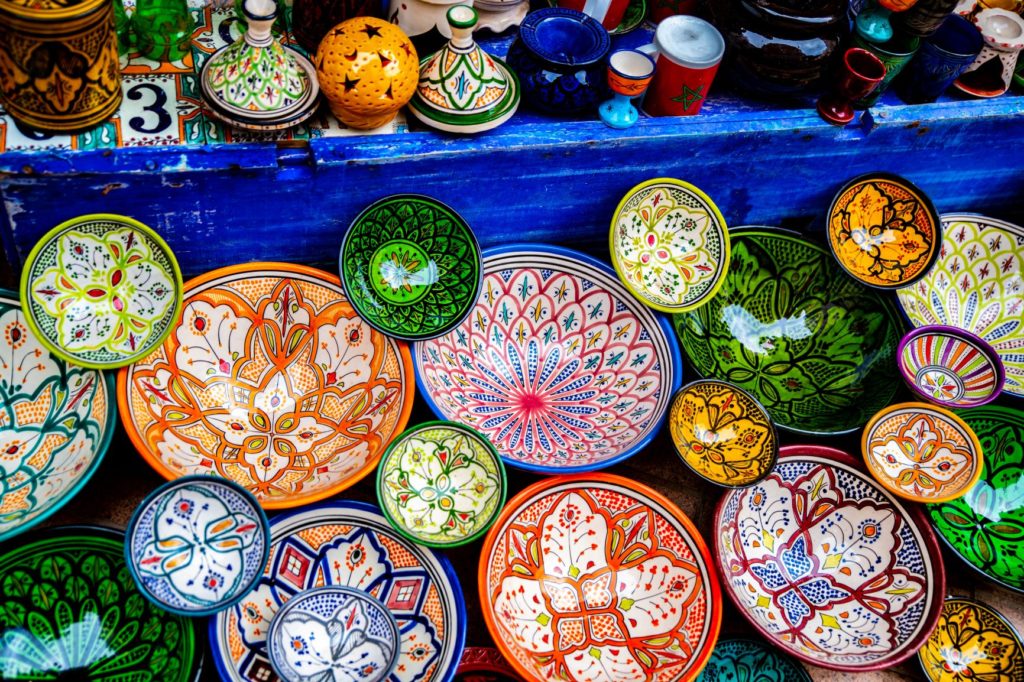
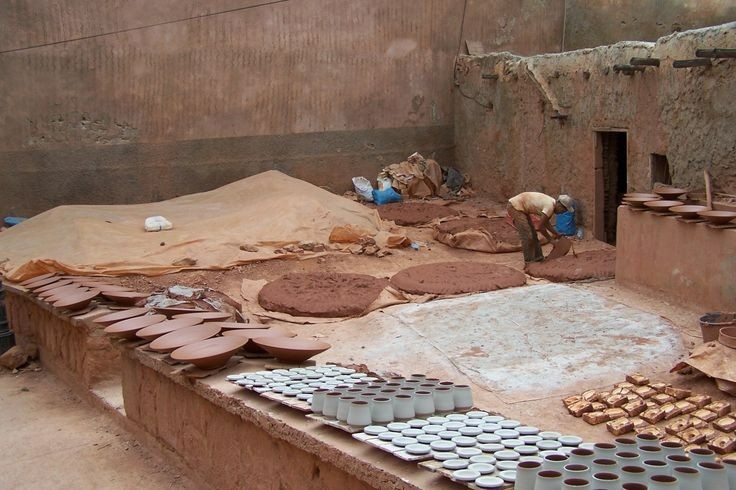
Safi, an Atlantic coastal city, is officially recognized as the pottery capital of Morocco. Its workshops produce an impressive quantity of pieces (tagines, plates, vases, bowls) shaped from a local clay rich in iron oxide, then glazed and decorated by hand. Safi pottery stands out for its famous deep cobalt blue and its polychromy with metallic reflections, a know-how inherited from the Fassi potters who settled in Safi in the 19th century. The Potters' Hill, located at the foot of Bab Chaâba, is one of the most fascinating places in the country for anyone interested in the craft of pottery: you see wood-fired kilns smoking, pieces drying in the sun, potters working in the open air. A scene that has barely changed in centuries.
Berber Pottery of Morocco: Raw Clay, Ancestral Patterns
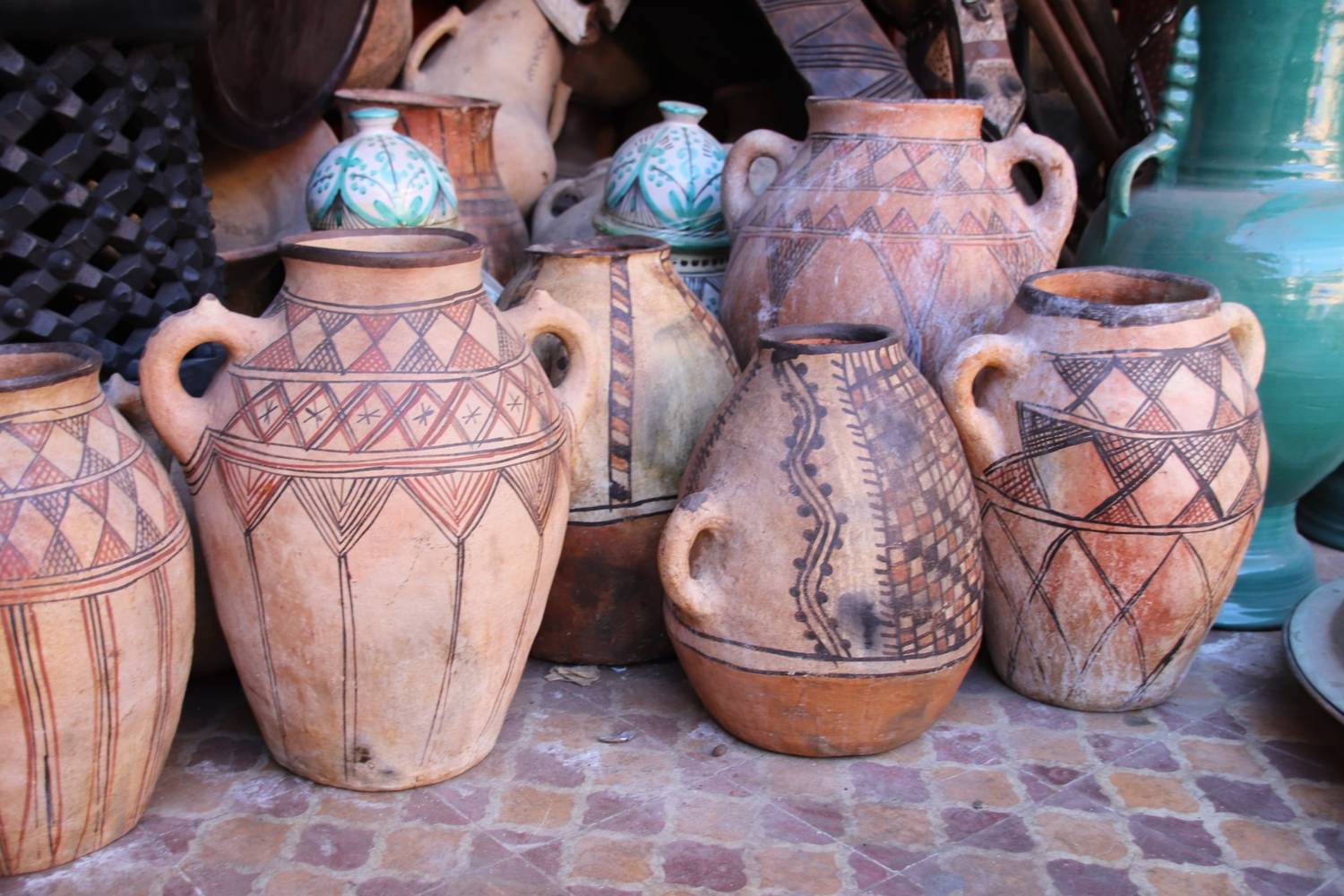
The Moroccan Berber pottery is perhaps the least known by travelers, and that's a real shame. You find it mostly in rural and mountainous regions (the Rif, the Atlas, the Ouarzazate region) and it stands out for its raw, unglazed look, with decoration based on red ocher and geometric patterns drawn by hand: triangles, diamonds, broken lines, so many symbols of tribal belonging and protection. It is women, traditionally, who made these pieces. A women's craft that is rarely documented, and even more rarely valued at its true worth.
Green Pottery of Morocco: The Mystery of Tamegroute
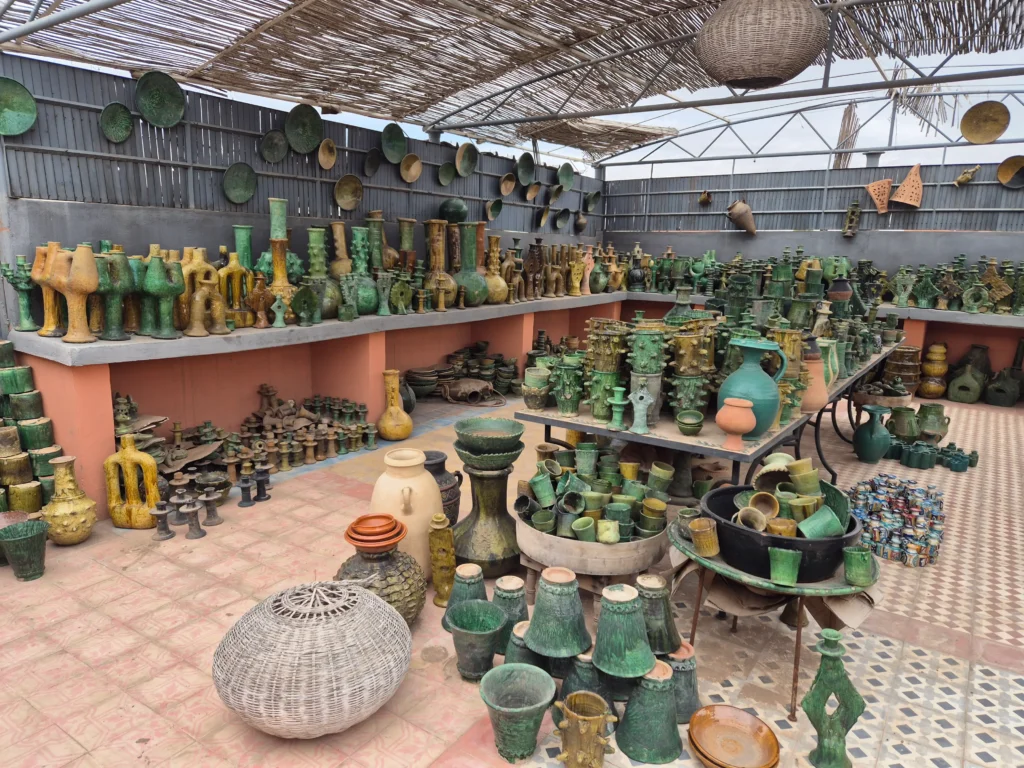
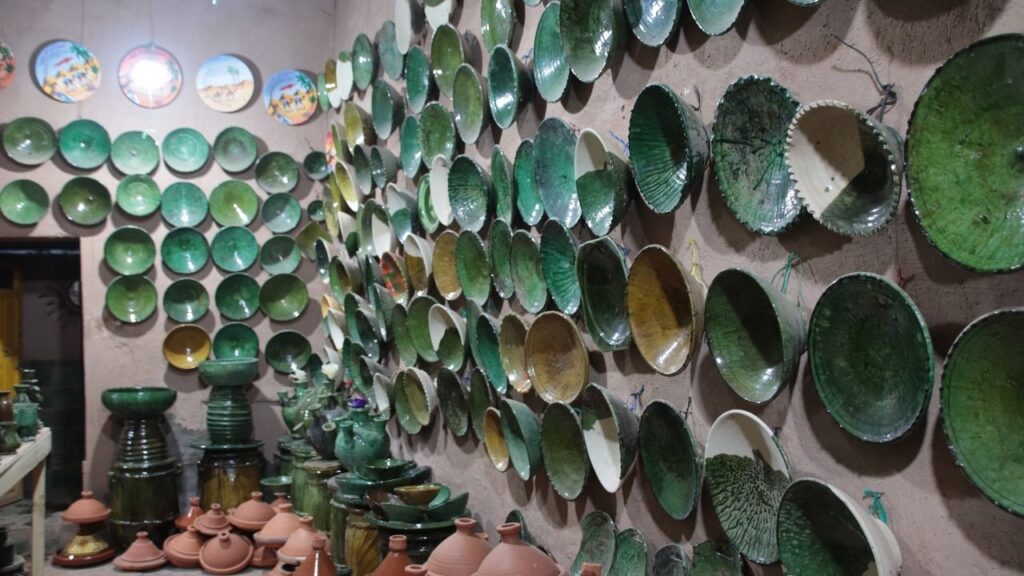
Green pottery of Morocco comes from only one place in the world: Tamegroute, a village in the Drâa Valley, about twenty kilometers from Zagora, in the deep south of Morocco. What makes Tamegroute pottery absolutely unique is its green glaze: a deep green, almost jade, sometimes speckled with brown or black, that runs slightly over the pieces to create unexpected effects with every firing. This characteristic green is obtained through a mixture of copper oxide and manganese, a formula jealously guarded for centuries by the village's artisans. Tamegroute itself is linked to a Sufi brotherhood, the Nassiriya zawiya, whose members developed and passed down this art of fire over the generations. To better understand the history of the village and its zawiya, the Tamegroute Wikipedia page offers a good starting point. The pieces are heavy and sturdy, and the shapes are simple, almost rustic: bowls, teapots, dishes, jars… It's precisely this deliberate rusticity that makes all their charm. Tamegroute pottery is the only Moroccan pottery recognizable by its color alone, and that deserves to be highlighted.
Marrakech and Oulja: Other Regional Crafts
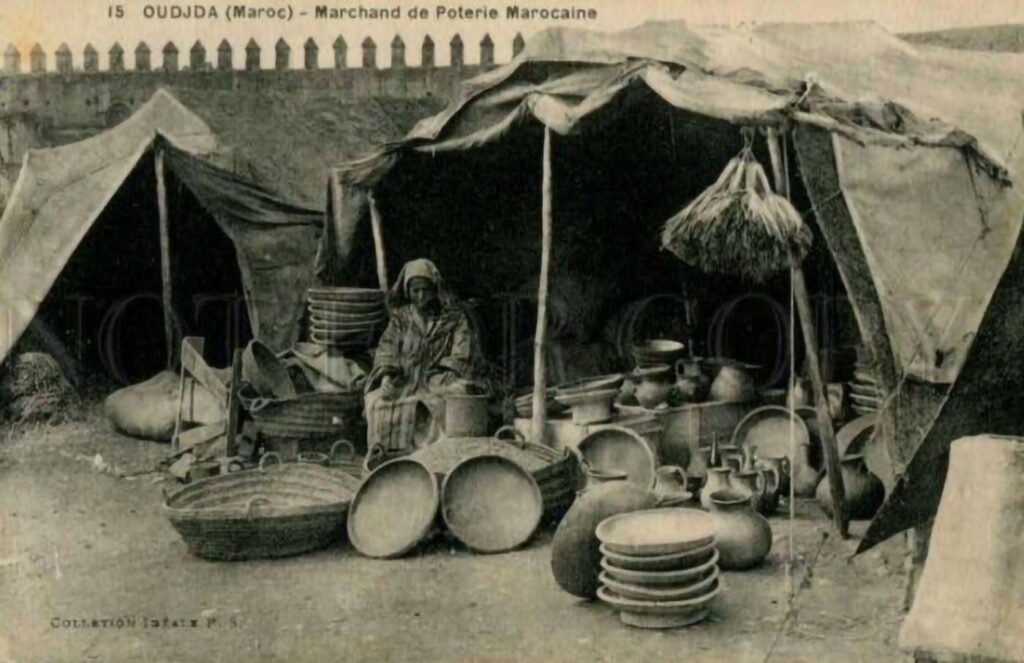
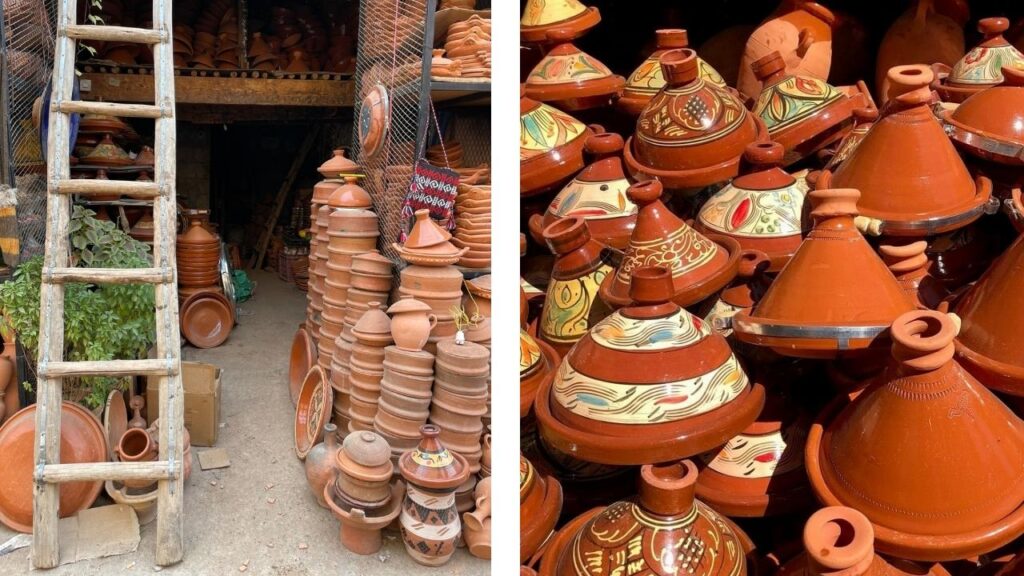
Marrakech and its region produce pottery in warm tones (ochers, terracotta, smoky brown), often unglazed or partially decorated, with a strong Berber influence. The Oulja district, in Rabat, is also a recognized craft center, known for finer pieces and colored glazes. Two more discreet crafts, but ones that deserve just as much of your attention.
Cade Oil Pottery: Black Decoration and Plant Tar
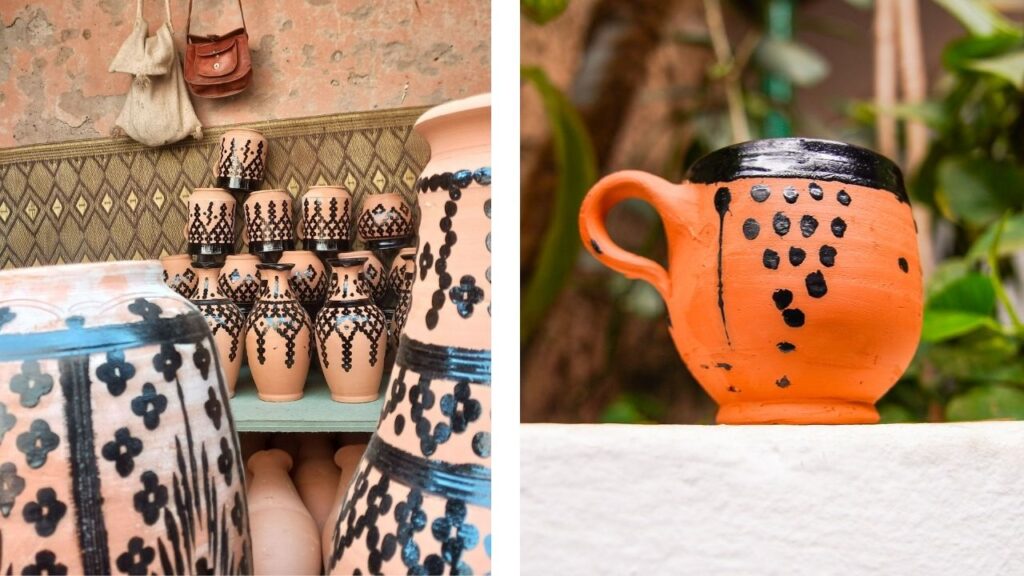
There is a kind of pottery in Morocco that few travelers can name but that many have come across: cups, bowls and jugs in unglazed red clay, adorned with geometric friezes and hand-drawn black dots. This decoration is made with cade oil (or qatrane in darija), a plant tar obtained by distilling wood in the absence of air. There are two things to tell apart that artisans themselves often use interchangeably: cade oil is extracted specifically from juniper wood (Juniperus oxycedrus), while the term tar (qatrane) refers more broadly to any plant tar from juniper, Atlas cedar or thuya. In pottery, cade oil is the one most commonly used. This tradition is found mainly in the Marrakech and Tangier regions, on unglazed utility pieces: qatrane waterproofs the porous clay, is said to purify the water stored inside and gives it that slightly smoky taste much appreciated in the Moroccan countryside. Note that this substance is now strictly regulated in France and Europe: classified as a hazardous product under CLP regulation because of its content of polycyclic aromatic hydrocarbons (PAHs), raw cade oil is strongly discouraged for children under 12 and pregnant women, and its use in raw form in mass-market cosmetics is prohibited.
Making Moroccan Pottery: A Craft from Start to Finish
What strikes you when you stop to watch a maâlem (the master artisan, as he's called in darija) at work is the apparent simplicity of the gesture and the real precision it hides. The process of making Moroccan pottery has barely changed in centuries: softening, shaping, decorating, firing. Four seemingly simple steps. But a mastery that takes a lifetime to acquire.
Preparing the Clay: The Potter's Raw Material
It all begins with the earth, called tîn in darija. Depending on the region, potters work with red clay (rich in iron oxide, denser, more rustic, as in Safi or the Berber regions) or white clay (kaolinite), finer, more malleable, used notably in Fez for glazed pieces. The clay is first sorted, cleared of stones and impurities, then kneaded at length (by hand or by foot) to drive out the air bubbles. Poorly prepared clay means a piece that cracks in the firing. The potter knows this, and takes the time it takes.
Wheel Throwing or Hand Modeling: The Piece Comes to Life
Next comes the step that many travelers dream of experiencing at least once: wheel throwing. The maâlem sets the lump of clay in the center of the wheel (often a foot-powered wheel, still widely used in Morocco) and begins to pull the material upward, hollow it out, refine it. In just a few minutes, a shape appears. This precise, almost meditative gesture is the result of decades of practice. In regions where the wheel isn't used, notably for traditional Berber pottery, hand modeling takes over, a technique just as demanding and fascinating to watch.
Drying, Glazing and Firing: Colors, Decoration and Finishing Touches
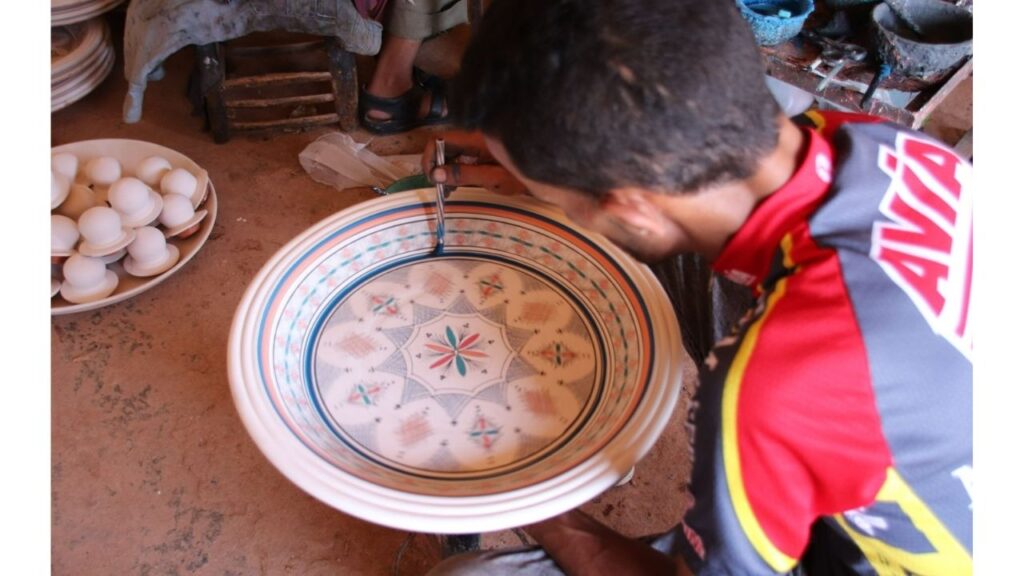
Once shaped, the piece dries slowly in the open air, a step that can't be rushed or the clay will crack in the firing. It's on the still-raw piece, before the first firing, that the artisan applies the decoration: geometric patterns painted with a brush, Arabic calligraphy, hand painting with cobalt or coloring oxides. Then comes the enameling, a layer of glaze that will give the piece its shiny look and its final color during firing. Finally, the piece is placed in a wood-fired kiln (or a gas one in more modern workshops), at temperatures that vary depending on the type of clay and glaze. This is where everything is decided.
The Green Glaze of Tamegroute: A Special Kind of Alchemy
In Tamegroute, the process follows its own rules. The glaze is applied in a generous, almost running layer, and the firing is done at low temperature, around 900°C, compared to 1,000 to 1,100°C for other Moroccan pottery. The result: the glaze melts unevenly, runs down the sides and creates texture effects impossible to reproduce identically. Every piece of Tamegroute pottery is therefore unique, not because anyone decides it, but because the fire decides in the artisan's place. It's this controlled imperfection that makes it a collector's item as much as an everyday utensil.
Buying Pottery in Morocco: Prices, Best Addresses and Workshops
How Much Does Pottery Cost in Morocco?
Pottery in Morocco is generally very affordable, as long as you know what you're looking for and don't let yourself be impressed by the prices displayed (or not) in tourist-oriented shops. If you buy in a souk, haggling is perfectly normal: a bchhal hada? (how much is it?) said with a smile is a good way to start the conversation. Here are some indicative ranges:
- Raw handmade tagine: between 50 and 150 dhs (5 to 15€) depending on size
- Glazed dish: between 80 and 300 dhs depending on size and workmanship
- Vase or decorative jar: between 50 and 600 dhs depending on size
- Dish set (6 plates): between 250 and 600 dhs
- Tamegroute piece: a bit more expensive than the others because of the rarity and quality of the pottery
The big difference in price for pottery in Morocco often comes down to the distinction between handmade craft and mass production. A handmade piece has slight irregularities, and that's a quality, not a flaw. In the souks, haggling is possible, but by buying directly from a potter or at a cooperative, you pay the fair price and pay the artisan directly.
Where to Buy Pottery in Morocco: Medinas, Cooperatives and Best Addresses by City
Fez and Safi are the two unmissable capitals. In Fez, the potters' quarter around Bab Ghisa groups together workshops and shops. In Safi, the Potters' Hill (Kechla) is the absolute address: you buy directly where the pieces were made, and that changes everything. In Marrakech, we recommend buying your Moroccan pottery on the road to Ourika (it will be cheaper). In the souks in town, favor the stalls outside the very touristy areas, noticeably cheaper for identical quality. In Tamegroute, family workshops sell directly to visitors: prices are gentle, the pieces are authentic, and the village itself is worth the detour. It is about 22 km from Zagora, easily reached by taxi. Finally, Agadir and its region offer beautiful pieces of Berber pottery in the craft cooperatives of the South, a good option for an ethical purchase at a reasonable price.
Pottery Workshops in Marrakech and Agadir: Make It Instead of Buying It
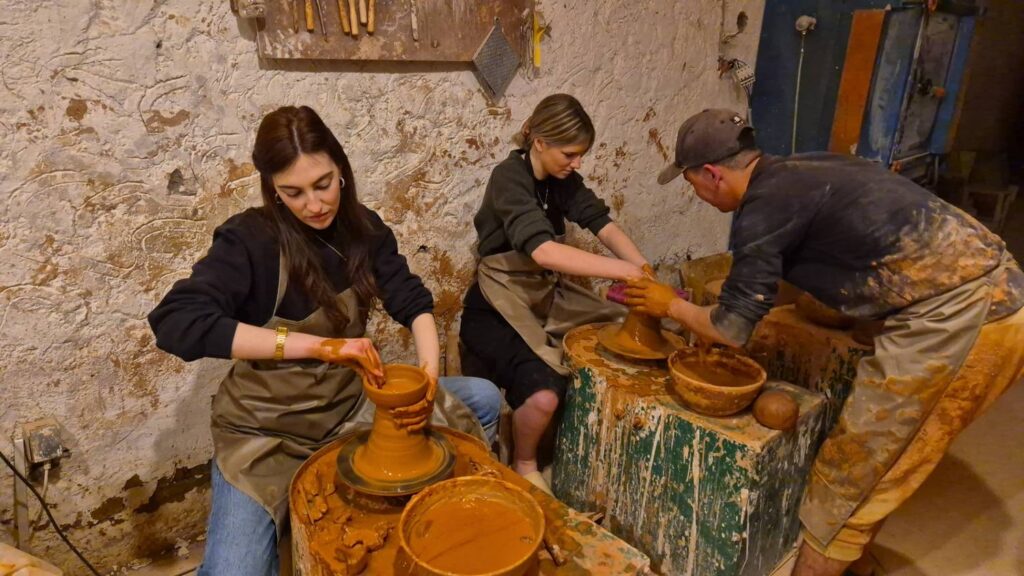
Buying a beautiful piece is nice. Making it yourself is an experience of another order. Putting your hands on a wheel, feeling the damp clay between your fingers, watching a shape be born under your own palms: no souvenir brought home in a suitcase has that flavor. A pottery workshop in Marrakech plunges you straight into the daily life of a maâlem, who patiently guides your movements without ever taking the wheel from you. In Agadir, similar workshops exist in craft centers. In both cases, no prior skill is needed: just the desire to get your hands dirty and to leave with a piece that exists in only one copy in the world.
The next time you come across a potter around a bend in an alley, you won't walk past his workshop without stopping. Moroccan pottery is one of those crafts that reveal, when you take the time to understand them, the full depth of a culture. A Tamegroute piece on your table, a Fez bowl in your kitchen: these are objects that tell something the tourist guides can't put into words. And if you want to go even further, Les Petites Experiences invite you to experience this craft from the inside, hands in the clay, alongside a real Marrakchi maâlem. Discover our pottery workshop in Marrakech and leave with a piece shaped by your own hands.