
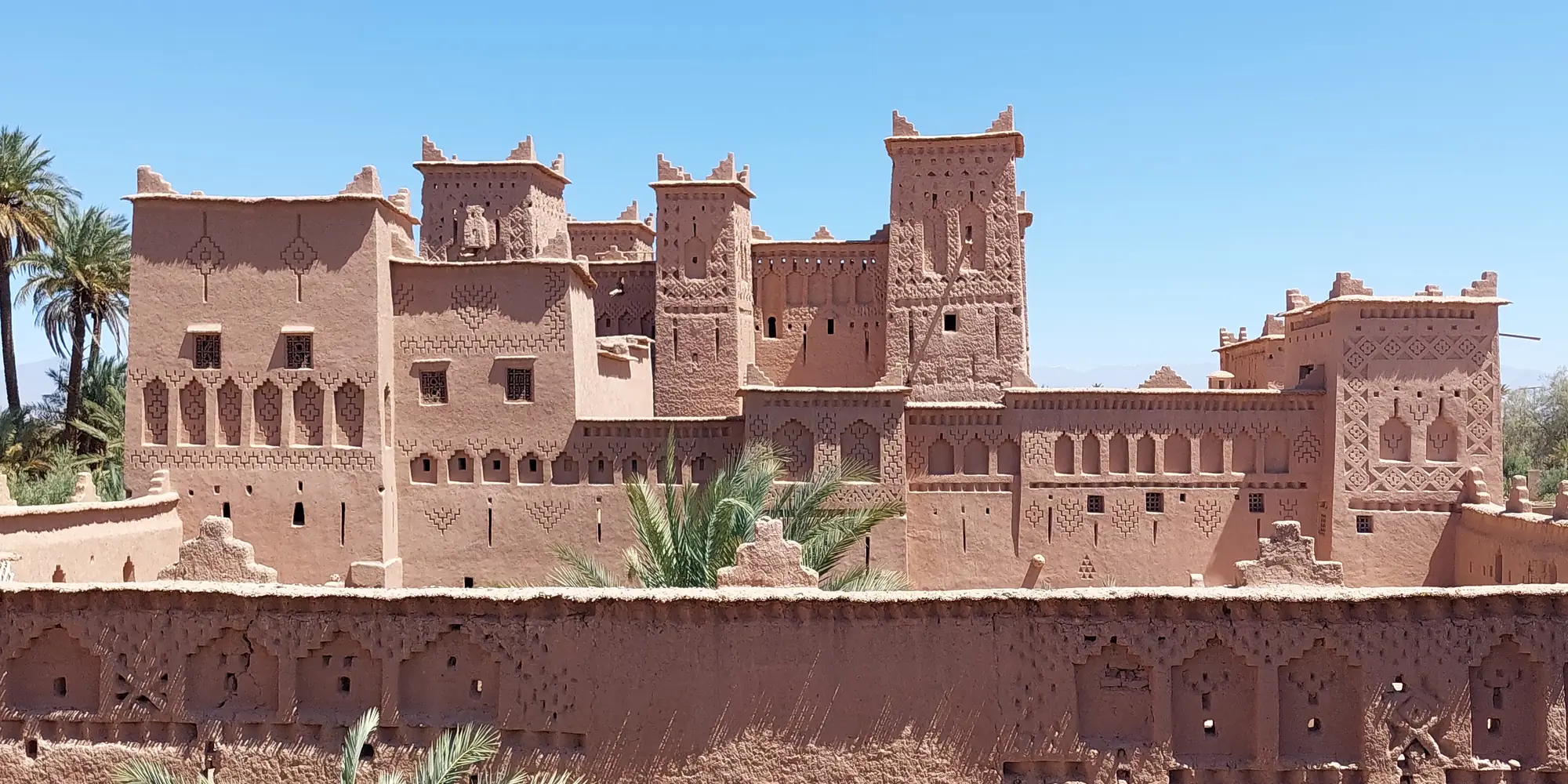
Between Ouarzazate and the Dadès Valley, the road runs through a landscape of rocks when, all of a sudden, a forest of palm trees rises on the horizon. You've reached the gates of Morocco's largest palm grove, and this is often where people forget to ask themselves what to do in Skoura — most travelers cross it in ten minutes and leave with a photo of a kasbah taken through the window. A shame, because behind the adobe walls live families, craftspeople and guides who know every path of the palm grove. In this article, we explain what to do in Skoura when you take the time to stop: visit the splendid Amridil kasbah, get your hands in the clay with a traditional potter, explore the palm grove with a local guide, discover the surroundings and plan your stop with no unpleasant surprises. So, shall we park?
Skoura, the Oasis Many Drive Through Too Fast
From the road, Skoura boils down to a line of palm trees and a few ochre towers. Yet behind this first curtain, the palm grove stretches far beyond and hides mud-brick kasbahs, some still inhabited, others slowly returning to dust. Skoura is nothing like a movie set: it's a thriving farming town, where families cultivate their plots just as their parents did before them. Here, nobody plays a role for visitors.
So why stop, when the Dadès Gorges and the desert await further on? Asking yourself what to do in Skoura means agreeing to slow down. The oasis isn't something you tick off like a monument on a list: you understand it by walking, chatting, sharing a tea with those who live there. That's exactly the spirit of our experiences in Skoura. No timed tour. Just time spent with the people of the oasis, at their pace. Here's where to start.
What to Do in Skoura First? Visit the Amridil Kasbah
If you only have an hour, this is where you should spend it.
Amridil Kasbah, Founded in the 17th Century and Still in the Same Family
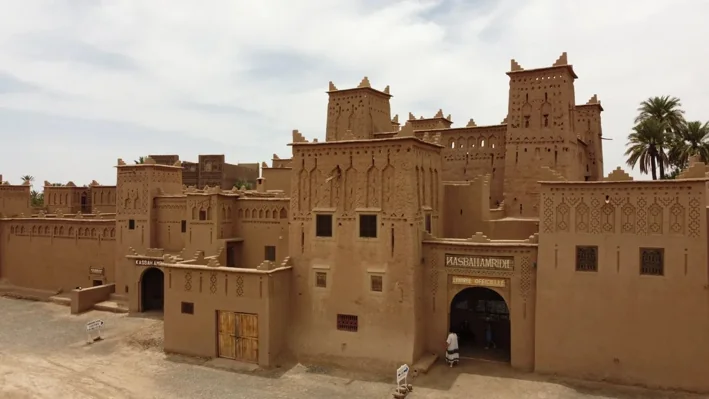
Founded in the 17th century, Amridil still belongs to the Naciri, a family of scholars linked to the famous zawiya of Tamegroute in the Drâa Valley. Originally, it was a fortified village posted at the entrance to the palm grove, on the edge of the oued. The big residence you visit today dates largely from the end of the 19th century. The family's descendants still look after the place, and that changes everything: you're not visiting a frozen museum, but a house with a memory. A detail that older Moroccans will remind you of with a smile: its silhouette appeared on the back of the old 50 dirham note.
What You Discover Inside
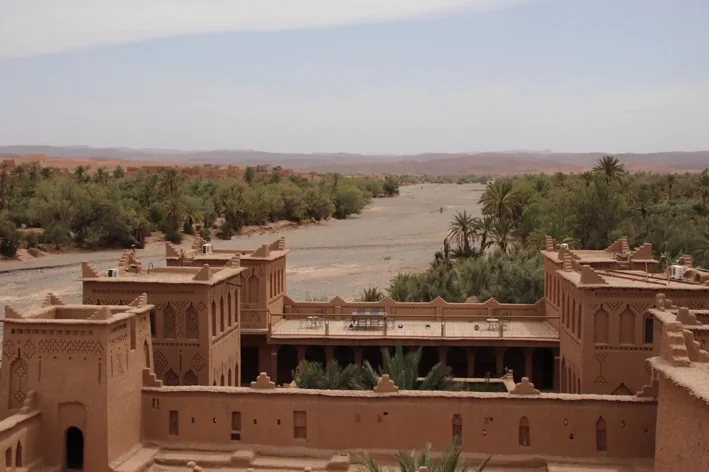
Past the door, you climb from floor to floor through a maze of adobe rooms, lit by small openings that keep things cool. Look up: the ceilings are made of woven reeds laid on palm beams. You'll pass the wells, the oil press, the bread oven, the hand-carved wooden locks, and the audience hall where the master of the house received villagers to settle their disputes. So many objects and rooms that tell how people lived here a few generations ago. The highlight comes right at the top: from the terraces, the view takes in the palm grove and, in the distance, the ridges of the High Atlas.
Our Tips for the Visit
- Two entrances, two tickets — the kasbah is split in two, each part with its own entrance and its own ticket. If you can only visit one, the right-hand part has kept a more authentic character and offers the highest terrace. The left one has been restored around an inner garden.
- Hours — open every day, generally from sunrise to sunset
- Entry fee — 50 dirhams per person
- Access — from the main road, follow the Amridil sign for about a kilometer. The kasbah is just across the oued bed, often dry (be careful on rainy days).
- Light — aim for late afternoon, when the low sun brings out the relief of the adobe. It's the best time for photos from the terraces.
- Guide on site — guides wait at the entrance. Without explanations, Amridil remains a beautiful setting; with a guide, every room tells a story. Just agree on the price before starting. Or include the kasbah visit in a longer visit of the palm grove.
Another Kasbah with a Strong History: The Baallal Family's
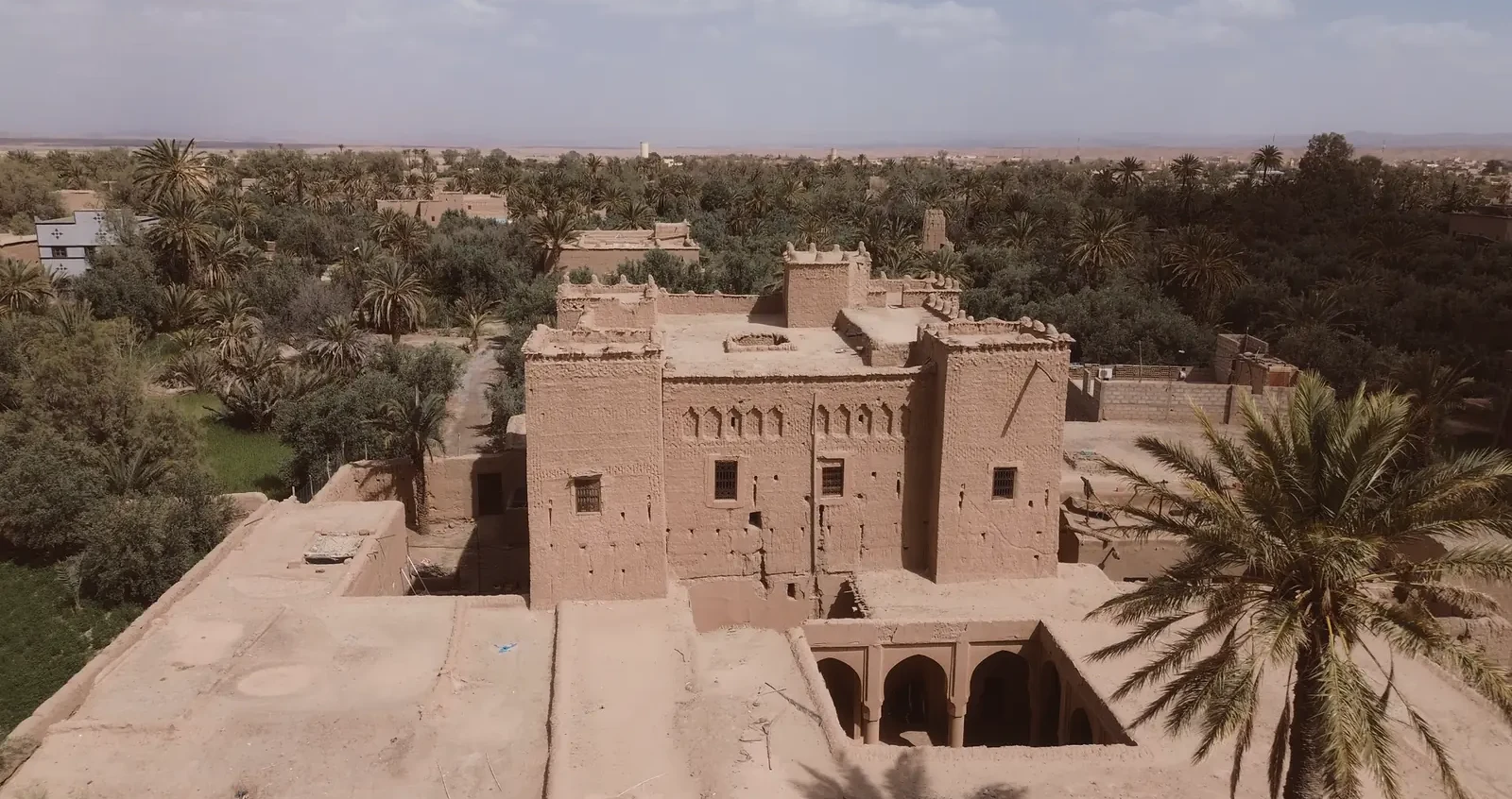
Amridil has only one flaw: it's the kasbah everyone visits. If you want to discover another kasbah with a strong history, we also recommend the meeting with the Baallal family, in the heart of the palm grove. Here, no ticket office: it's Abderrahim, keeper of the family memory, who opens his door to you. After a moment shared over a meal on the rooftop terrace and a tea facing the palm grove, he takes you to discover the kasbah of his ancestors and tells you,
from the inside, what it means to be the heir of a kasbah and of an influential family of the region in the time of Pasha Glaoui.
Meet Mohamed, a Traditional Potter in Skoura
In the palm grove, his smile is almost as famous as his jars. Pushing open the door of his workshop is one of the most human answers to the question "what to do in Skoura."
Know-How Passed Down from Generation to Generation
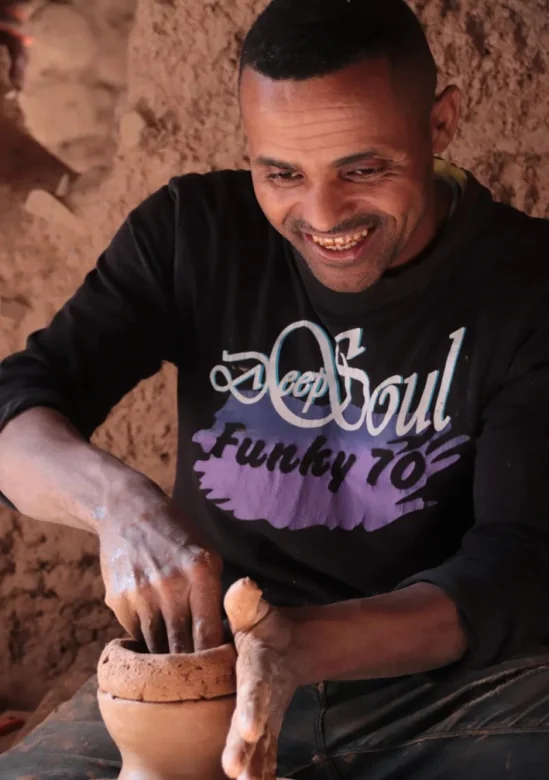
Mohamed carries on the traditional pottery workshop of his family, the Kabor, with gestures that have barely changed: the clay is first worked with a wooden paddle, then shaped on a wheel he turns with his heel. From his hands come big jars, but also plates, cups and bowls. Nothing is molded, every piece keeps the mark of his fingers.
Getting Your Hands in the Clay
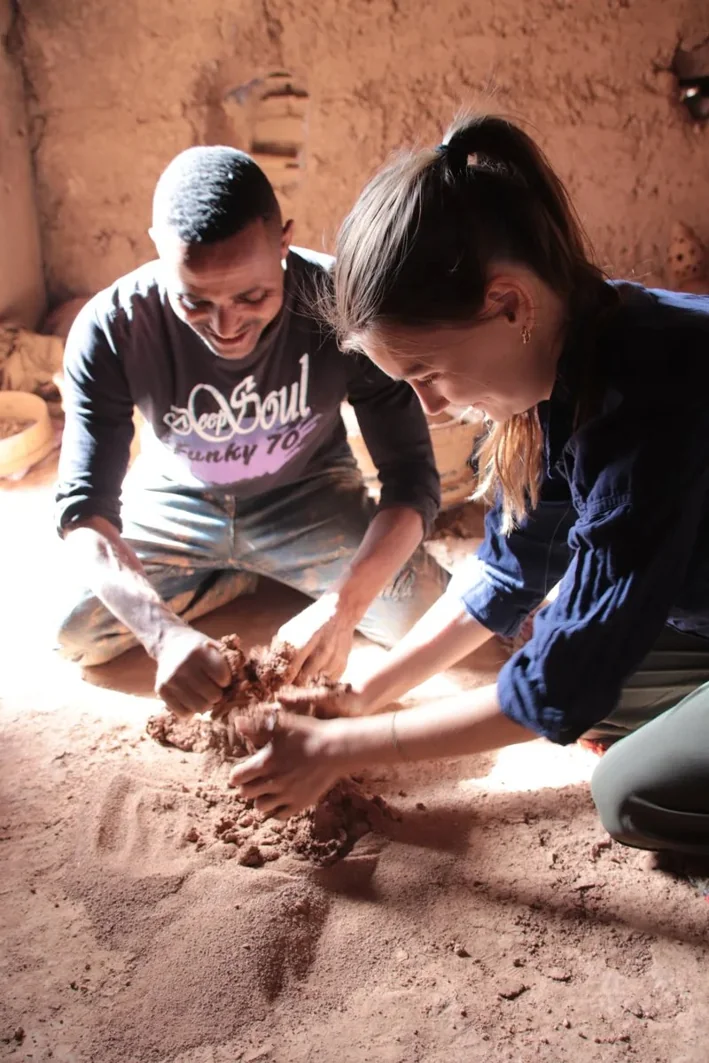
Mohamed doesn't just show you: he sits you at the wheel. You try to center the clay, it escapes you, he laughs, recenters it with one move and lets you start again. Children are welcome (and often more talented than their parents), and tea is shared between two attempts. It's not a workshop in the strict sense: no stopwatch, you stay as long as you like.
Let's be honest: Mohamed has become a bit of a celebrity. You can now find him on YouTube, in travel guides, and many passing travelers come to say hello. So you'll surely not be alone in his workshop, but the gestures have lost none of their authenticity, and his sunny smile alone is worth the detour. When leaving, a small tip and a Baraka llahu fik (may God bless you, a warm way of saying thank you) will make him happy.
Our Tips for the Visit
- Location — the workshop is on the heights, on the west side of the palm grove, far from the main road. To find it, nothing easier: enter "Auberge Migusta" in your GPS, Mohamed is 50 meters further on the left (workshop marked with red/orange signage).
- When to go — not too early in the morning, and if you want to be sure to find him, give him a quick call the day before!
- Price — buying a piece of Skoura pottery remains the best way to support his work. Otherwise, a small tip when leaving is welcome.
- Contact: +212 6 78 56 07 02
Discover the Skoura Palm Grove with a Local Guide
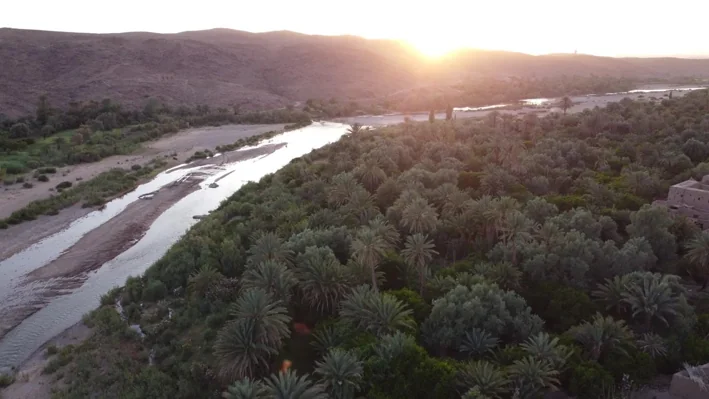
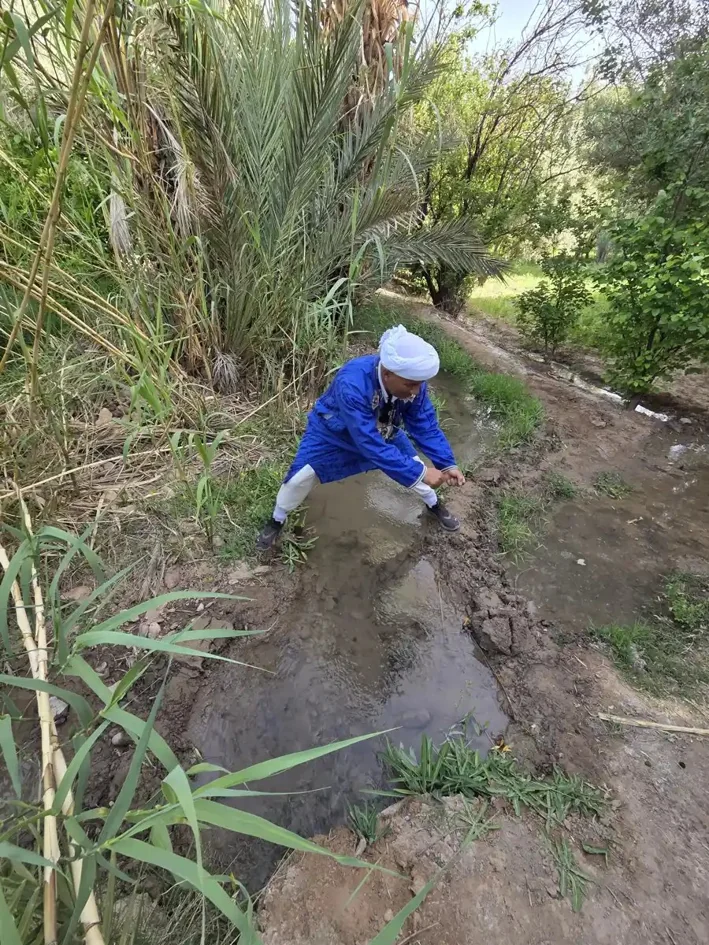
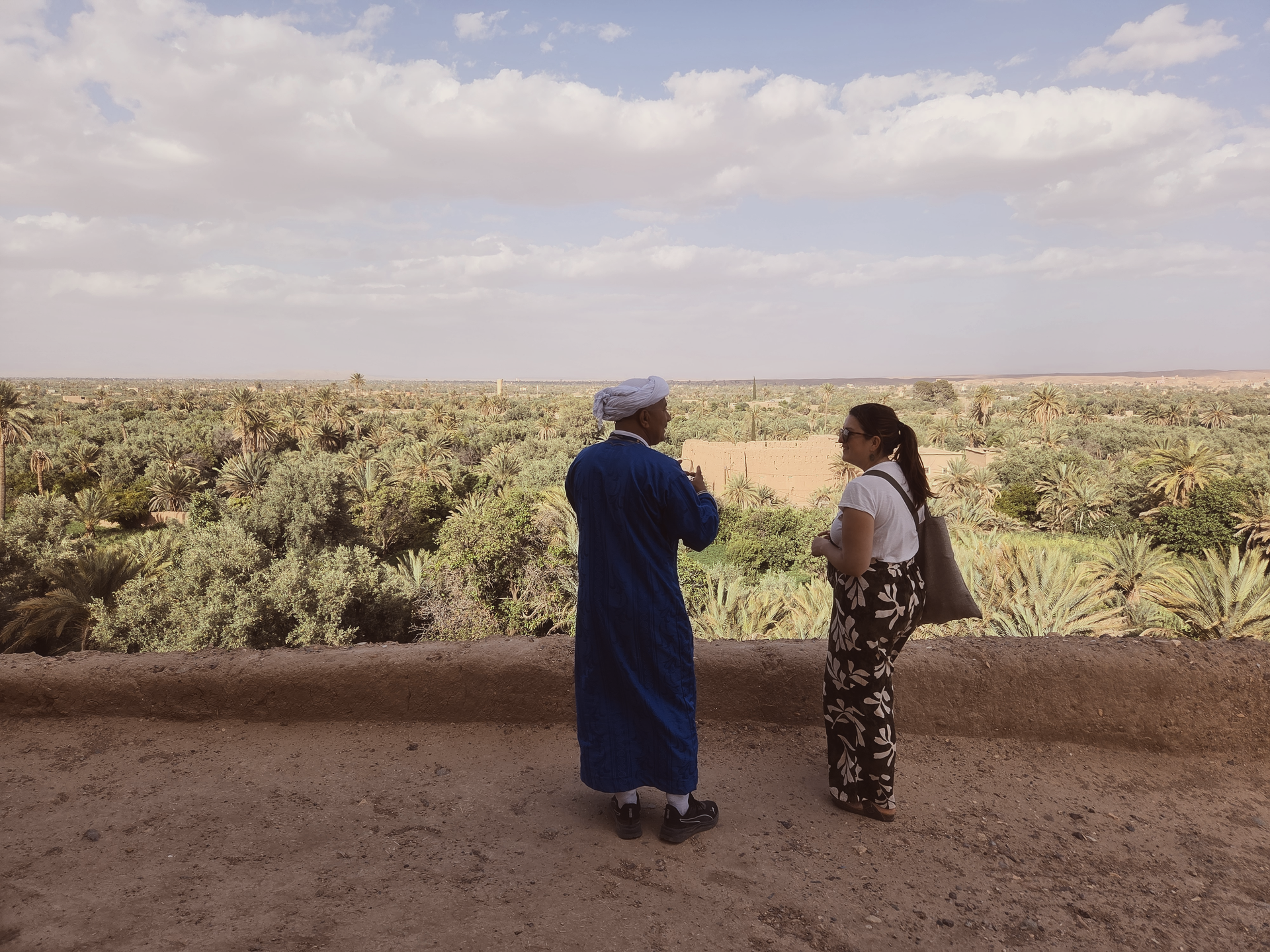
Entering the palm grove means changing scale. The road disappears, the air cools, and when it's time for the water turn, you hear the channels flowing between the plots. If you're wondering what to do in Skoura to truly understand the oasis, this is where it all happens.
Understanding the Palm Grove
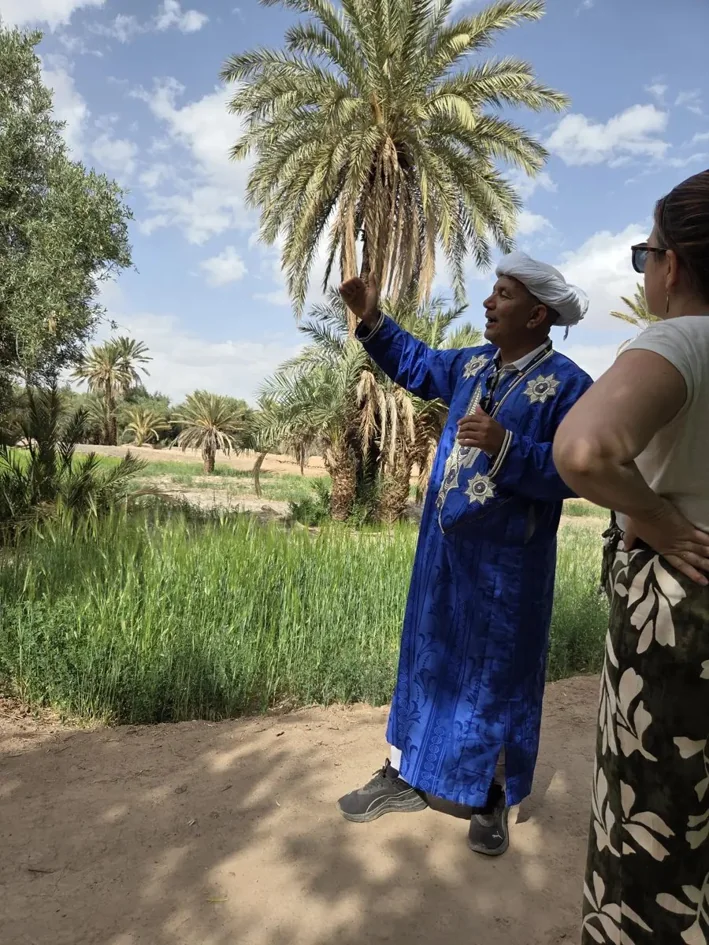
The Skoura palm grove works in tiers: date palms at the top, olive, almond and pomegranate trees below, and on the ground the families' crops. More than twenty varieties of date palms grow there, and a hundred bird species live there. Everything depends on water. It arrives through the khettaras, underground galleries that capture the water table at the foot of the mountains and bring it to reservoirs, then it's distributed among the plots by the seguias, those little open-air channels. Each family waits for its turn at the water. This fragile balance, threatened by successive droughts, is part of the Biosphere Reserve of the Oases of Southern Morocco, recognized by UNESCO in 2000.
Why Go with a Guide Rather Than Alone
The paths all look alike and the plots are private: alone, you quickly go in circles, or walk into someone's property without knowing it. With a local guide, the walk takes on another meaning. It's not just about admiring beautiful landscapes: you get cultural explanations, historical anecdotes about this kasbah or that seguia, and meetings with residents happen naturally, because your guide knows everyone.
The palm grove is explored on foot or by bike. With us, it's on foot and by three-wheeler, with a guide native to the region, in three or seven hours, and the walk can extend to the Amridil kasbah and even to Mohamed the potter's. That's the spirit of our guided tour of the Skoura palm grove — a guided tour in Skoura at the pace of the oasis.
What to Do in and Around Skoura
Once you've discovered the kasbah, the workshop and the palm grove, there's enough left to fill a second day. Here are three experiences to enjoy around Skoura.
The Rural Souk
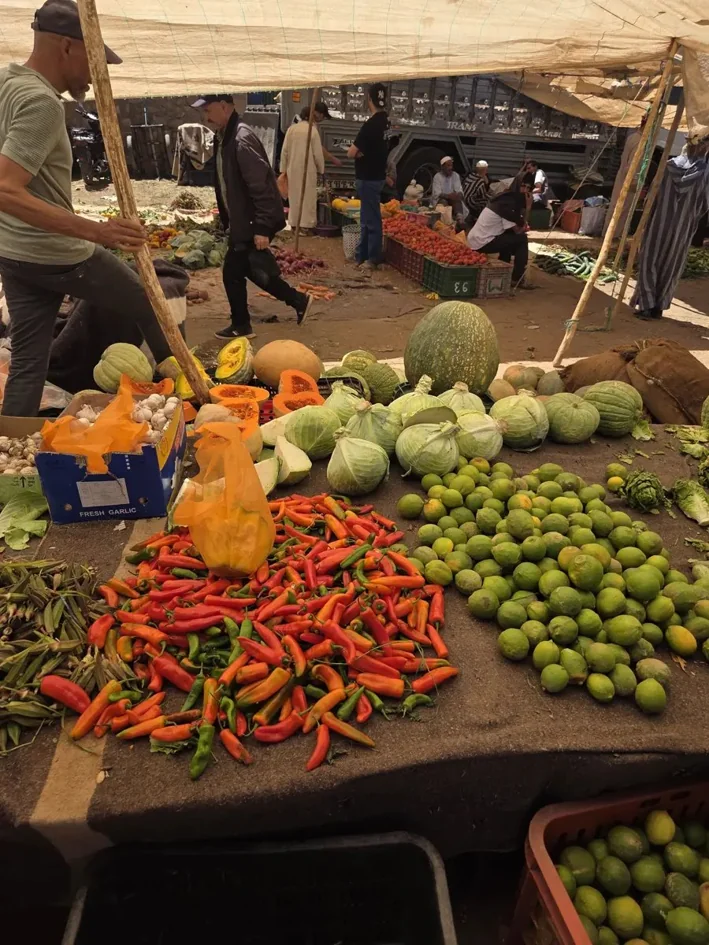
Nothing like the souks of Marrakech: here, people come to buy their vegetables, spices, tools, and catch up with the neighbors. On Monday, it's the Skoura souk that gathers the whole region. On Thursday, it's the turn of Toundoute, about twenty kilometers away, in the Almond Valley: an even more rural souk.
Traffic jams of carts and vans are part of the show. For whom? Curious people who like observing local life rather than shop windows.
The Sidi Flah Oasis
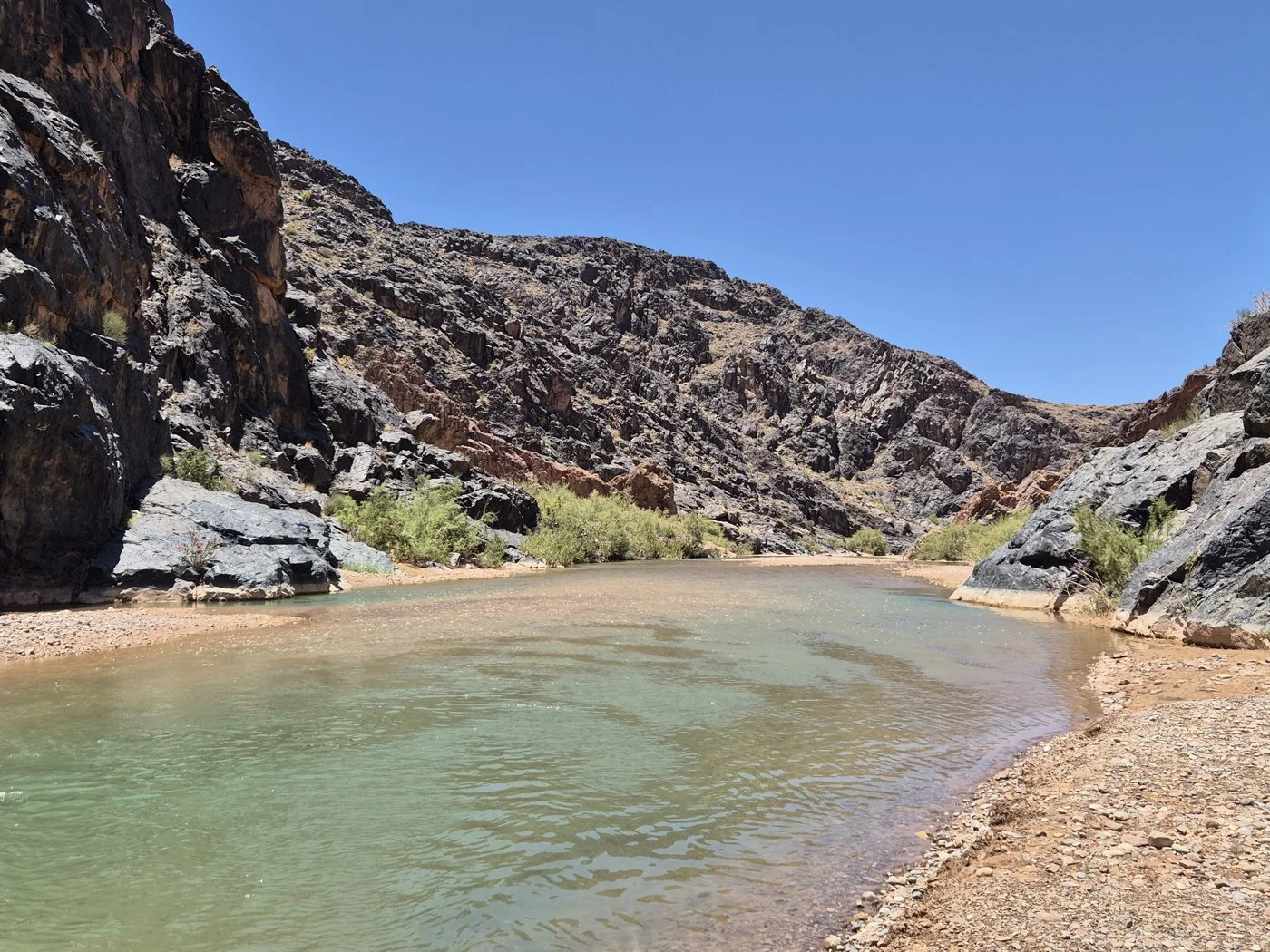
Less than ten kilometers from Skoura, on the banks of the Dadès oued, the Sidi Flah oasis is best discovered on foot, far from mass tourism. You go from one garden to another over little wooden bridges, between villages and palm trees, all the way to gorges carved by water. For whom? Walkers and those who want to extend the immersion in a corner few travelers take the time to see. Our six-hour day, with a guide native to the area,
ends with a lunch in a tent: the full program is on the page day in the Sidi Flah oasis.
The Almond Valley
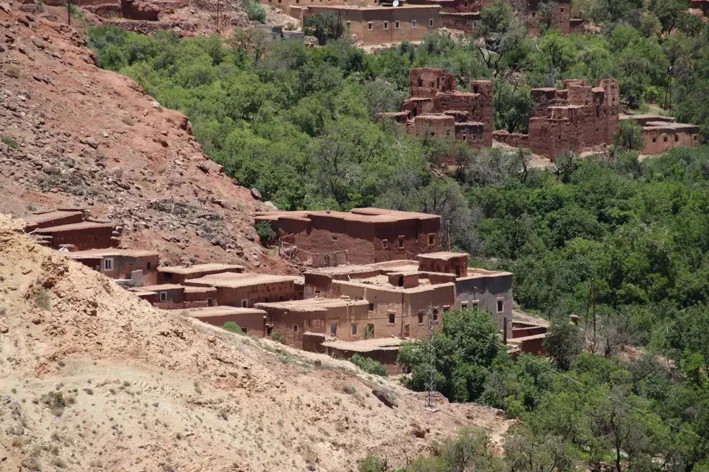
Leaving Skoura toward Toundoute, the road sinks into the Almond Valley, between mud villages, old kasbahs and huge oueds. In February, when the almond trees are in bloom, the valley completely changes its face. The rest of the year, the walk remains magnificent, among cultivated terraces.
For whom? Nature and photo lovers. It combines with the rural souk in our day in the Almond Valley.
Visiting Skoura: Our Practical Tips
How to Get to Skoura
From Ouarzazate, follow the N10 east for about forty kilometers. From Marrakech, the road crosses the Tizi n'Tichka pass, perched at 2,260 meters, one of the country's most spectacular drives, then goes through Ouarzazate: allow about four hours to Ouarzazate without breaks, then about forty minutes to Skoura. In winter, the pass can close for a few hours after a snowfall: check before you leave. A car remains the simplest. Without a car, you can take the Supratours or CTM bus from Marrakech to Ouarzazate, then grands taxis connect Ouarzazate to Skoura for about 25 to 35 dirhams per seat: they leave when full, so arm yourself with patience.
When to Go
Spring (March to May) and fall (September to November) are the best seasons to visit Skoura: it's mild and walks are comfortable. In July and August, highs hover around 37 to 39 °C in the region, but the advantage is that even at the hottest hours, you're nicely in the coolness of the palm grove! February also has its charm, with the almond trees in bloom. And if you're still wondering what to do in Skoura, time your visit for a Monday, souk day: it's the best moment to see the oasis come alive.
How Long to Stay and Where to Sleep
To really enjoy Skoura in Morocco, plan at least two days and two nights: one for the kasbah, the workshop and the palm grove, a second if you want to add Sidi Flah or the Almond Valley. The adobe guesthouses nestled in the palm grove are the best way to experience the oasis: in the evening, the silence is total, and the morning starts with the birds.
Next time a forest of palm trees rises out of the rocks, on the road of a thousand kasbahs, you'll know what to do in Skoura — this time, you park. You climb onto the terraces of the Amridil kasbah, you botch your first bowl on Mohamed's wheel, you follow a seguia to the heart of the Skoura palm grove, and the ten-minute stop becomes a whole day, then a night in an adobe guesthouse. Because Visiting Skoura isn't about ticking off one more kasbah on the road to the desert: it's about entering a thriving oasis, at the rhythm of the water and the families who have cultivated it for generations. And if you're still wondering what to do in Skoura to discover it from the inside, without wasting time looking for the right guide or the right door, we've gathered on one page the walk in the palm grove with a native guide, the meal with the Baallal family, the day in the Sidi Flah oasis and the Almond Valley souk. All that's left is to choose from our activities and tours in Skoura. We're saving you a spot in the shade.
Cover photo: Jam Willem Doormembal, CC BY 2.0, cropped.