
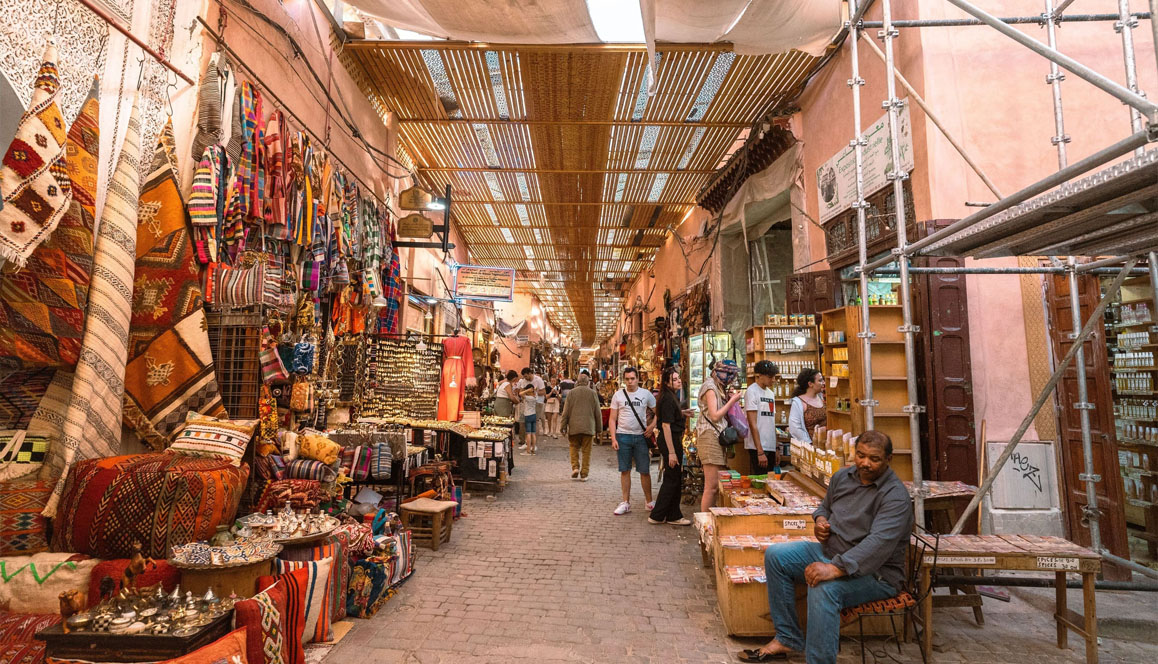
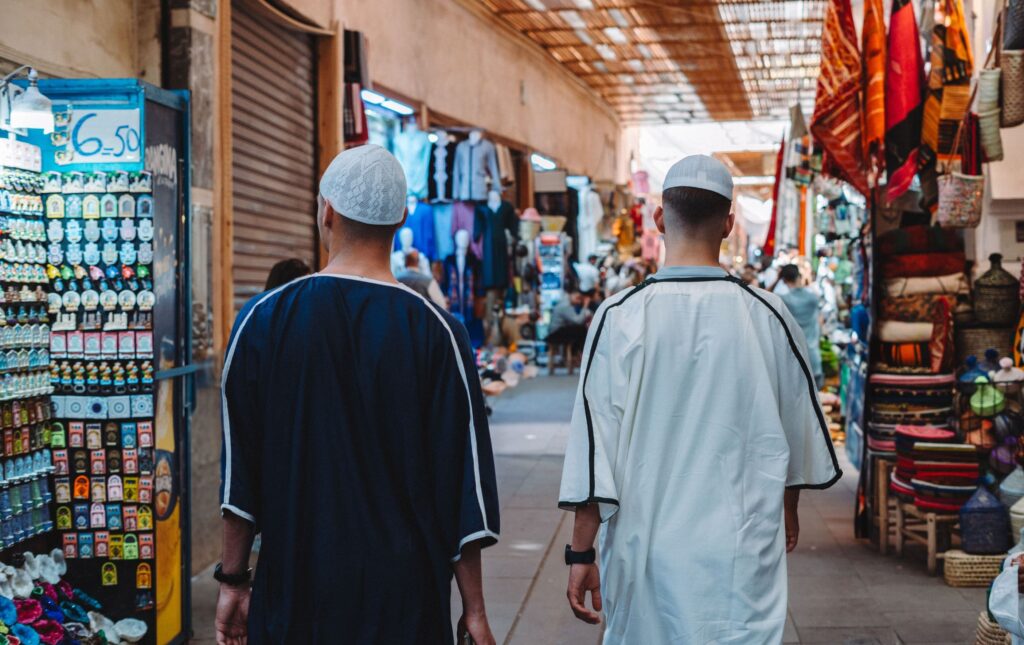
You're standing in the middle of the souk, on the last day of your stay, and your suitcase is still empty of that Marrakech souvenir that truly feels like you. All around you, the stalls overflow with babouches, rugs, lanterns and pottery, and every vendor swears their price is "the best, just for you." It's hard to sort out the real artisanal favorite from the plastic object made on the other side of the world. This guide answers a simple question: which souvenir to bring back from Marrakech so that it's truly worth the trip, where and how much to buy it without getting ripped off, and how to negotiate while knowing roughly what prices to expect. And if you feel like going further, we also show you how to make your souvenir with your own hands, in an artisan's workshop in Marrakech. Head to the souks.
Which Souvenir to Bring Back from Marrakech? Our Must-Haves
Between the stalls of the souks and the windows of the medina shops, there's enough to keep you hesitating for hours. Here are the souvenirs that most often end up in suitcases.
Moroccan Leather: Babouches and Leather Goods
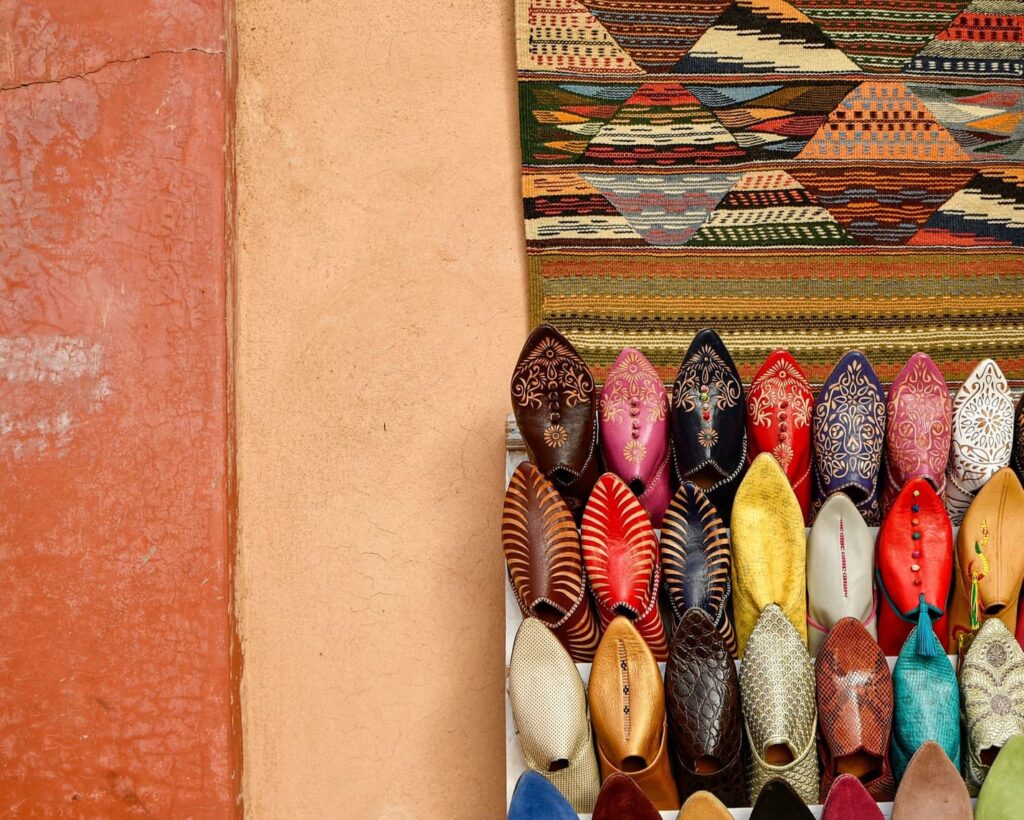
The babouches are without a doubt the Moroccan souvenir par excellence: these slippers in soft leather, with pointed or round toes, come in a wide variety of colors and styles. Expect to pay generally between 100 and 250 MAD for a handmade pair in genuine leather of good quality, and between 250 and 500 MAD, or even more, for hand-embroidered models or those made from premium leather. In very touristy areas, a handmade babouche in genuine leather rarely sells for less than 120 MAD; a much lower price should prompt you to check the quality of the leather carefully. For bags, belts and poufs, take the time to examine the material: genuine leather generally has a natural grain, slight irregularities, a supple texture and a characteristic smell, whereas synthetic leather is often more uniform, smoother and may give off a slight plastic smell or chemical odor.
Pottery and Ceramics: From Tea Cups to Decorative Tajines
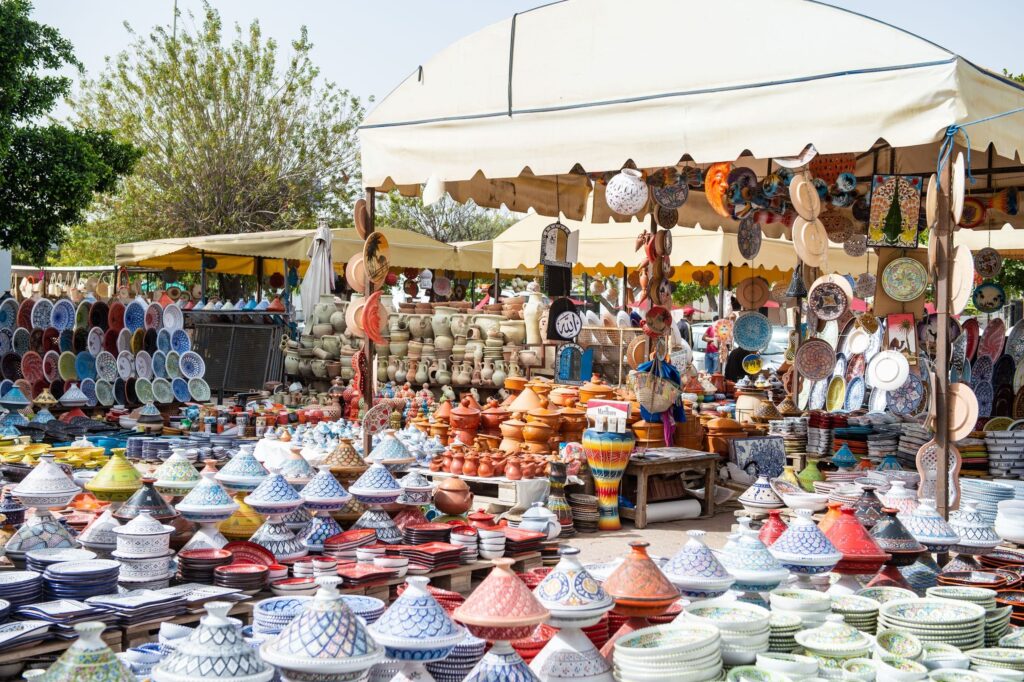
Decorative tajines, tea cups and small ceramic bowls are among the easiest souvenirs to carry (and to squeeze into a suitcase). Expect to pay generally between 30 and 150 MAD for a simple piece, between 100 and 500 MAD for a more elaborate decorative piece, while truly artisanal and imposing creations signed by a maalem, can exceed 1000 MAD. The Moroccan pottery looks different depending on the region: the emblematic blue of Safi, the distinctive green of Tamegroute, the refined ceramics of Fez or even Berber red-clay pottery with geometric patterns. In Marrakech, you will mainly find pieces from these major production centers, resold in the souks, craft shops and some cooperatives.
Spices, Saffron and Argan Oil
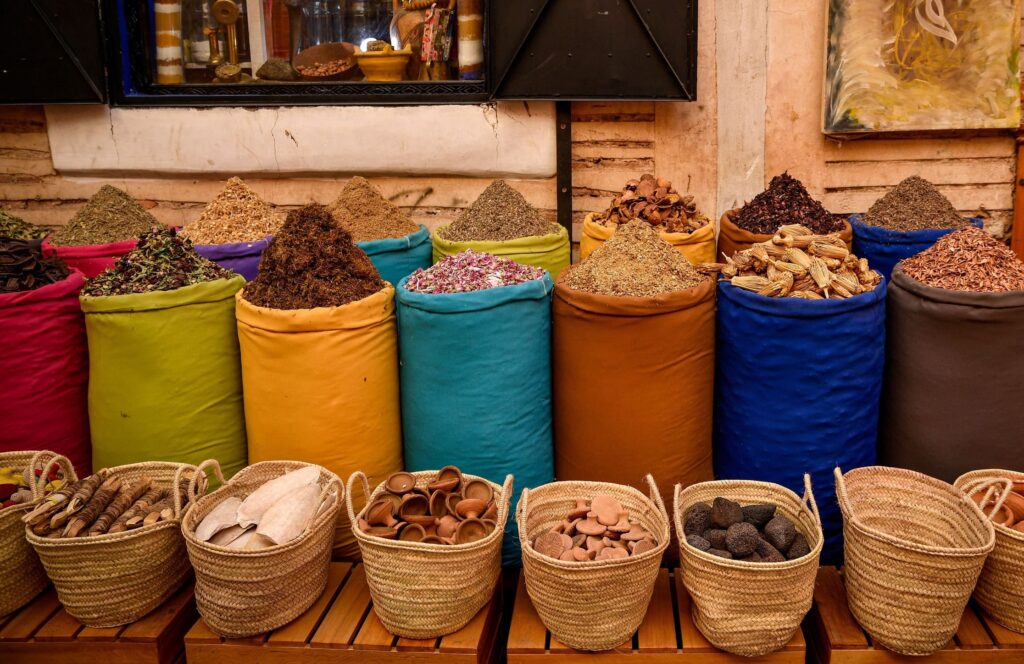
You can't leave without a bag of ras el hanout, this spice blend whose composition varies by region and by merchant, and which can combine twenty or so ingredients, or even more. Expect to pay generally between 10 and 20 MAD per 100 g in the souks, depending on the quality of the blend.
Saffron, often from Taliouine, is one of the most precious spices in Morocco. Expect to pay about 30 to 50 MAD per gram for good-quality saffron, while the best vintages can exceed 80 to 100 MAD per gram. An abnormally low price should raise suspicion: it's often safflower ("bastard saffron") or a lower-quality product.
Be just as vigilant with argan oil. There are two types: culinary oil, made from lightly roasted kernels with a nutty taste, and cosmetic oil, extracted from unroasted kernels, intended for skin and hair care. Note: there are no cooperatives making argan oil in Marrakech and its region, because the argan tree doesn't grow there: if someone tells you otherwise, it's most likely a scam. To find out where to buy real argan oil in Marrakech, see the section below. Argan oil is expensive: expect to pay between 600 and 800 MAD per liter. An oil offered at an abnormally low price may be diluted with other vegetable oils or not be 100% pure.
Finally, if you're bringing oil or honey home, don't forget that bottles of more than 100 ml must go in checked luggage.
Moroccan Pastries: The Souvenir You Can Eat and Freeze
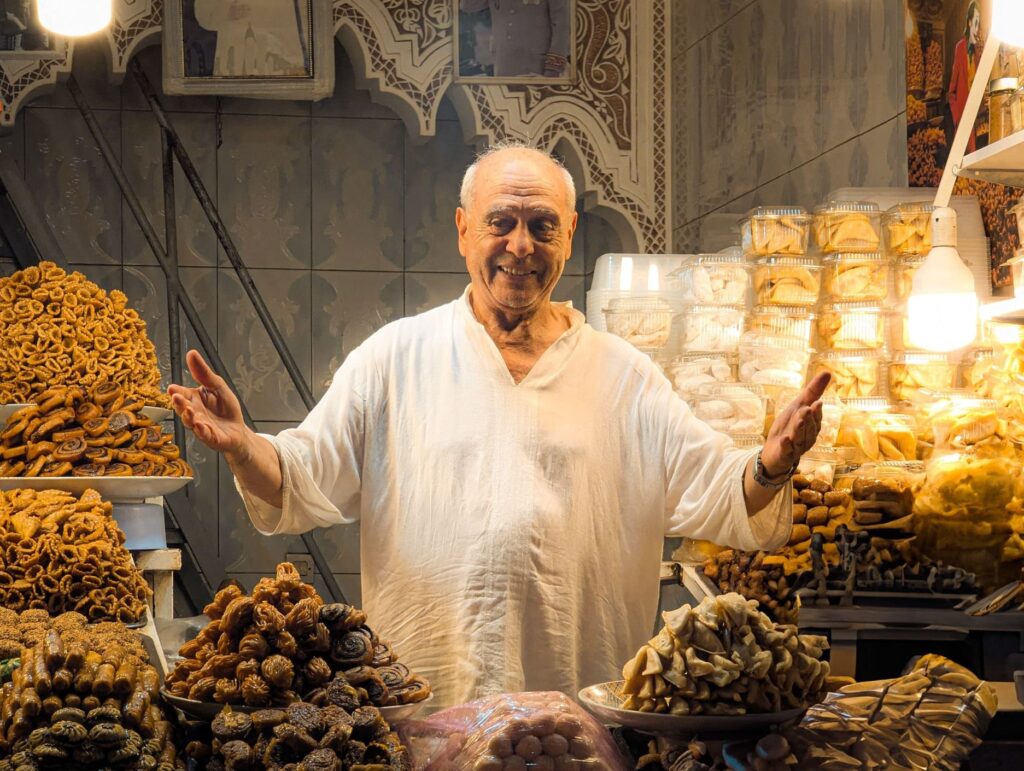
Moroccan pastries are among travelers' favorite souvenirs: they can be enjoyed as soon as you get home, shared easily, and keep or freeze very well. The gazelle horn (kaab el ghzal), filled with almond paste and scented with orange blossom, as well as the chebakia, a flower-shaped cake coated in honey and sesame seeds, are among the great classics of Moroccan pastry. Expect to pay generally between 35 and 60 MAD per kilo for dry cookies, between 80 and 100 MAD for shortbread or peanut cakes, and between 120 and 200 MAD for almond cakes.
Favor artisanal pastry shops with high turnover, where products are regularly replaced and kept away from heat. The gazelle horn travels very well in a rigid box and keeps for about one to two weeks in an airtight container. All Moroccan pastries freeze very well (thaw at room temperature).
As for Moroccan crepes, the msemens and the baghrirs (thousand holes) also make excellent edible souvenirs: they freeze very well for one to two months and regain their softness after a few minutes in the pan.
Finally, remember to bring back a jar of amlou, the famous Moroccan spread made from roasted almonds, argan oil and honey. Expect to pay about 100-120 MAD for a 250 g jar (60-70 MAD for the peanut version). It's normal for the oil to naturally rise to the surface: just stir well before enjoying.
Rugs, Textiles and Lanterns
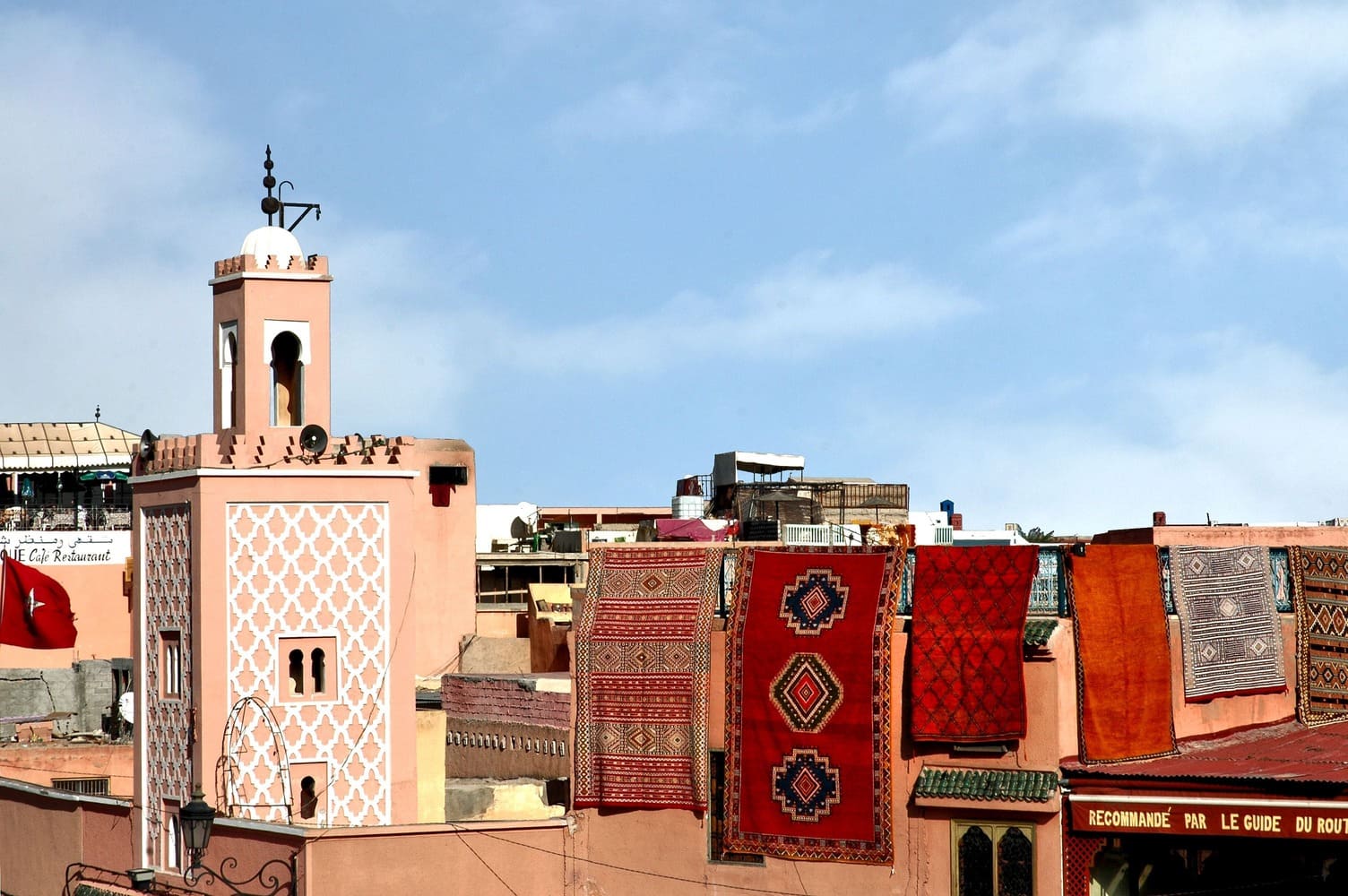
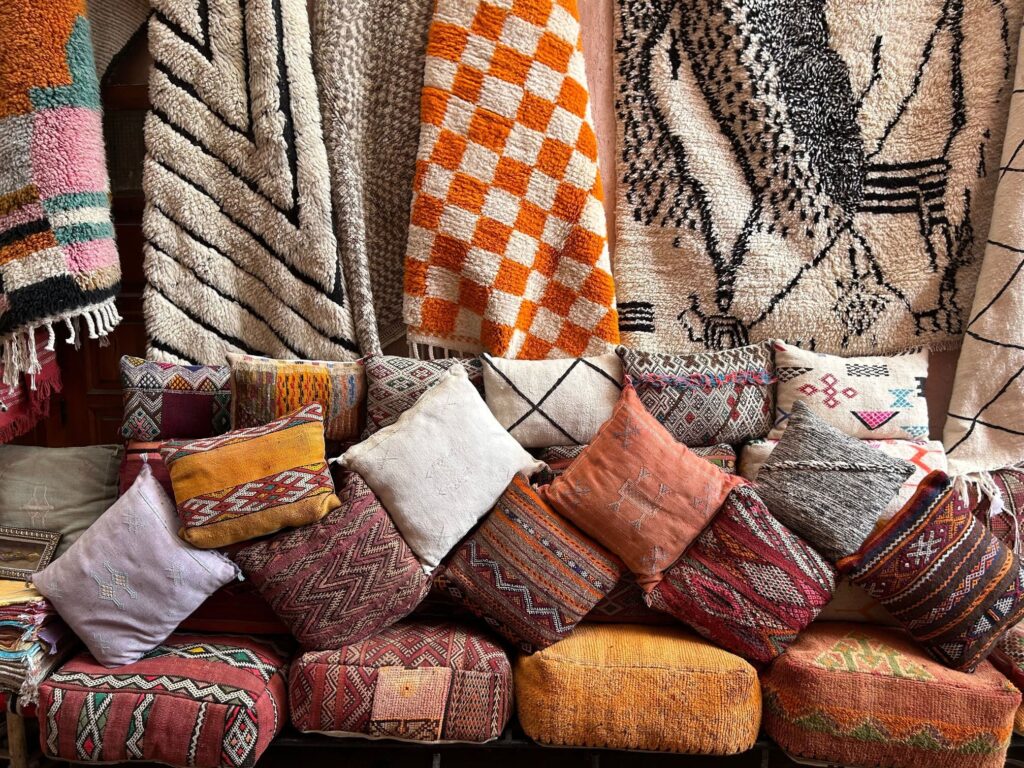
A handmade Berber rug is one of the most beautiful souvenirs you can bring back from Morocco, but also one of the most varied. Expect to pay about 600 to 1,500 MAD for a small kilim (flat-weave rug), while an authentic wool Beni Ouarain rug generally starts around 3,000 MAD and can exceed 10,000 MAD for large pieces. Other emblematic styles, such as Azilal, Taznakht or Zanafi rugs, captivate with patterns and colors unique to each region. Take the time to visit a weaving cooperative or an artisans' workshop: you'll be able to see the production techniques, better understand what justifies the price of a piece and compare the quality of the wool and the weaving.
The Moroccan lanterns in wrought iron, brass or colored glass are also very popular. Expect to pay about 80 to 200 MAD for a small model, 200 to 500 MAD for a medium-sized lantern and up to 1,500 MAD, or even more, for large, entirely handmade models. Before buying, compare several pieces: lift them to judge their weight, check the quality of the cutouts, the welds and the fit of the glass panes. A heavier, well-finished lantern will generally be sturdier and longer-lasting.
Where to Buy Your Souvenirs in Marrakech? Souks, Shops and Cooperatives
Knowing where to buy your Marrakech souvenir is often the key to not getting ripped off. Here's how to find your way among souks, shops and cooperatives to find the right Marrakech souvenir in the right place.
The Medina Souks
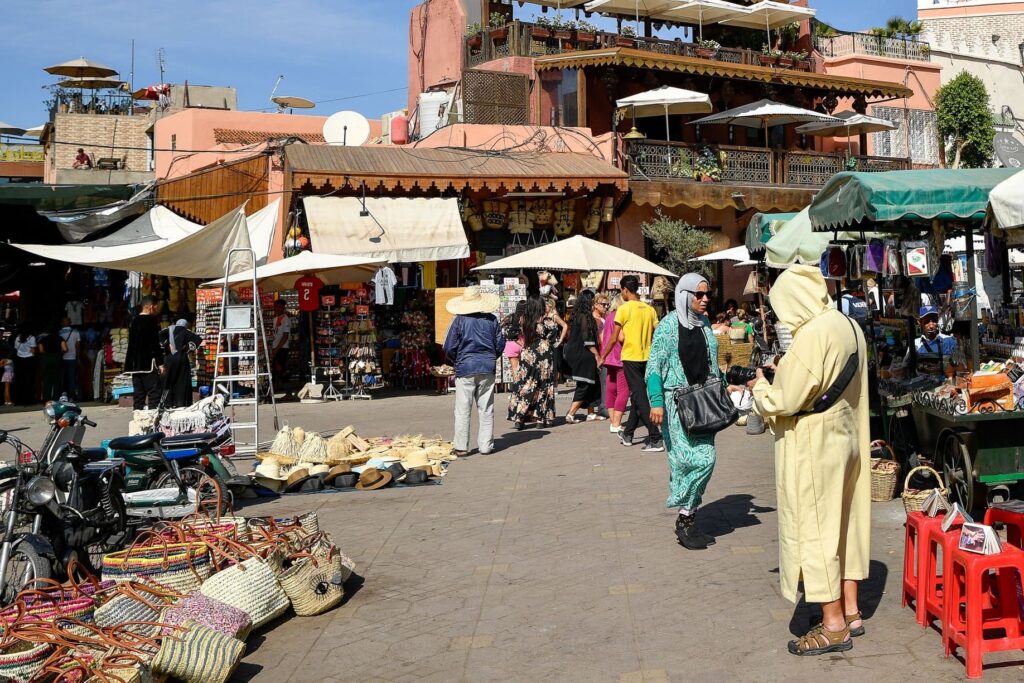
The souks of Marrakech are traditionally organized by trade, although specialties have somewhat blended today. The Souk Semmarine, the main shopping artery, is ideal for textiles, traditional clothing and a wide variety of crafts. The Souk Smata is known for its babouches, the Souk Cherratine for its leather goods and the Souk Haddadine for its metalwork, notably lanterns and wrought iron objects.
For spices, saffron and aromatic herbs, head to Rahba Kedima or the Souk Attarine, two of the most renowned areas of the medina. We advise you to buy your spices not in herbalist shops for tourists (where you'll pay a lot without the quality being there), but rather in the small grocery shops where locals go.
By going straight to the specialized districts, you can more easily compare the quality of products and the prices offered by several artisans. If possible, come in the morning, when the alleys are calmer and vendors take more time to chat with visitors.
Good to know: The souks are a real labyrinth. If you spot a shop you like, save its location on your phone or note a landmark (fountain, fondouk or square) before continuing your visit. It will save you many detours if you want to come back and buy later.
Shops and Cooperatives: Fixed Prices, Guaranteed Quality
If haggling really isn't your thing, several shops and cooperatives in Marrakech offer fixed prices. The Ensemble Artisanal, located on Avenue Mohammed V, a few minutes' walk from Jemaa el-Fna, is a complex dedicated to Moroccan crafts, supported by the institutions responsible for promoting the arts and crafts trades. It brings together dozens of artisans offering leather, pottery, jewelry, rugs, woodwork and metalwork, with prices generally displayed. Even if you plan to haggle in the souks afterward, a first visit will let you better gauge quality levels and going prices.
For local products and cosmetics, argan oil, olive oil, honey, amlou or natural care products, APIA Marrakech, in the Guéliz district, is a well-known address for its displayed prices and products from Moroccan cooperatives.
Finally, the craft cooperatives, especially those specializing in weaving, generally offer better traceability of products while contributing to more direct pay for the women artisans, but are often located outside the city.
Negotiating Without Getting Ripped Off
In Morocco, haggling at the souk is nothing aggressive, it's a coded dance, often accompanied by a mint tea. A few simple rules: start at around a third, or even half of the quoted price, and negotiate gradually from there. Compare the same item in several stalls before making up your mind. Stay relaxed and smiling, it's not a power struggle. If the price seems too high to you, a simple bezzaf (literally "too much," implying too expensive), accompanied by a smile, is usually enough to restart the discussion. And if the seller turns down your offer, no worries: a simple chokrane (thank you) is enough to leave on good terms, or to come back later with a better offer.
The Marrakech Souvenir You Make Yourself
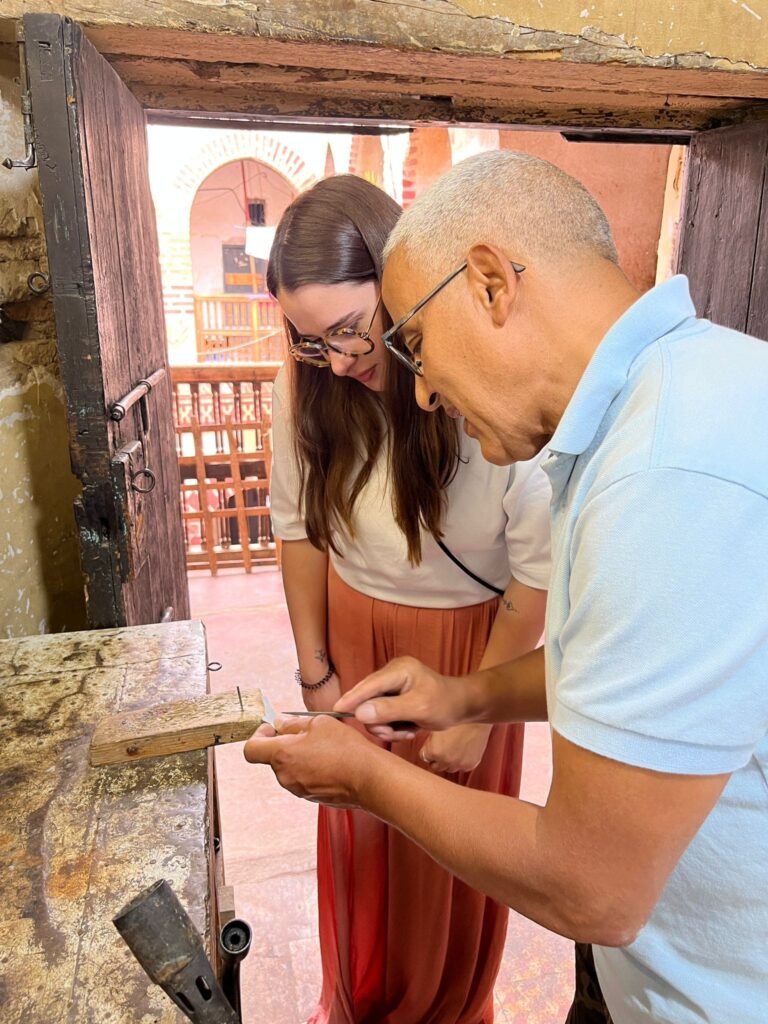
There's another way to bring home a Marrakech souvenir — not buying it, but making it yourself, alongside an artisan who opens the doors of their workshop to you. That's what Les Petites Expériences offers, with two workshops, one dedicated to jewelry, the other to leather.
The Jewelry Workshop with Hamid, Master Jeweler
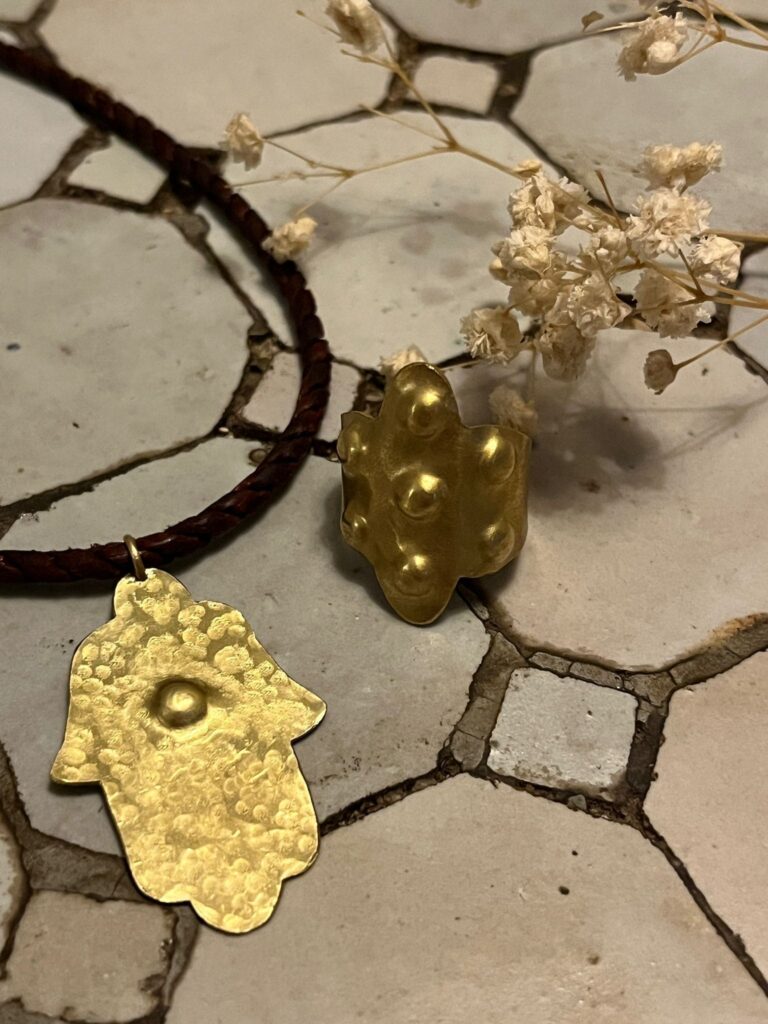
A stone's throw from the Dar El Bacha Museum, in a former caravanserai that still houses several artisans today, Hamid welcomes you into his jewelry workshop, a family story passed down for five generations. Around his workbench, he guides you step by step through the making of your own brass jewelry (earrings, pendant or ring depending on current designs): marking, sawing, filing, assembling. No need to have ever held a file, Hamid supports you at every step, all punctuated by a mint tea and a few anecdotes about his journey. You leave with a 100% unique piece of jewelry, shaped by your own hands, a Marrakech souvenir that no shop could ever sell you.
The Leather Workshop with Youssef, Master Leatherworker
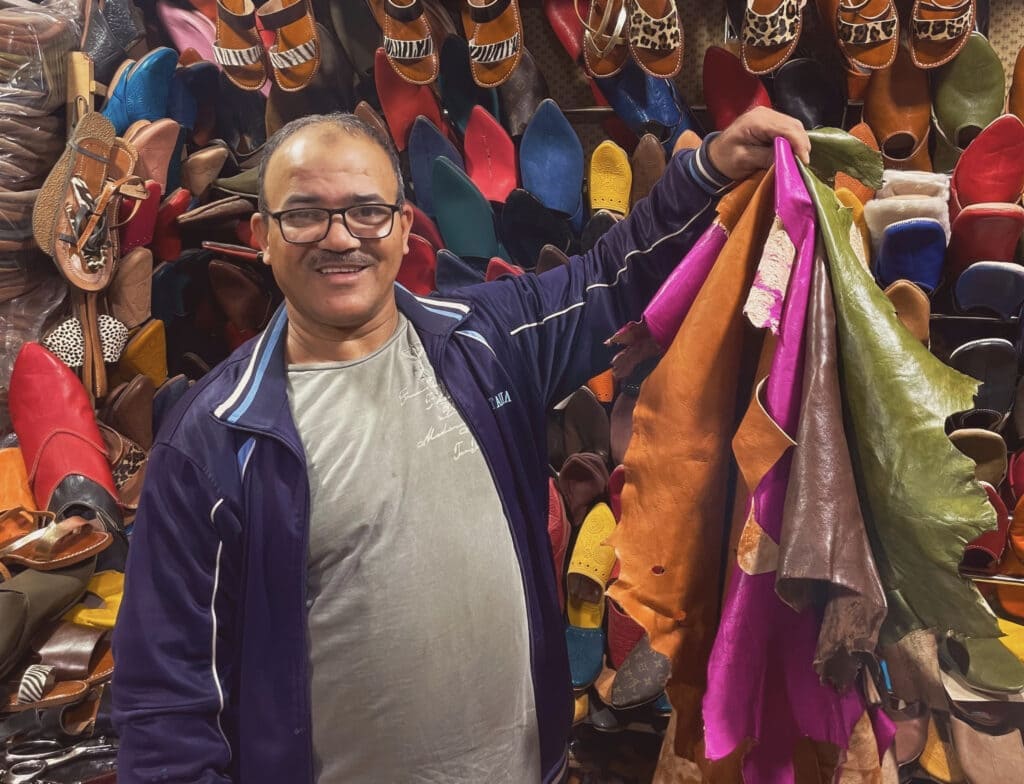
In the Marrakech leather workshop, a few steps from Jemaa el-Fna square, right in the souk, Youssef carries on a family tradition of Moroccan leatherwork. The workshop begins with discovering the hides, their textures and the dyeing and softening techniques used for generations, over tea, of course. Next comes the choice of model and color (cherry red or marron glacé brown, up to you), then the making: marking, cutting, assembling, gluing, up to the finishing touches that Youssef does himself to avoid accidents with misplaced fingers. Result: a 100% handmade leather object, to your taste, with the option of also leaving with sandals or a jacket bought directly at the workshop, with no risk of being ripped off.
Now you're set to head home with a real Marrakech souvenir, not a plastic gadget bought in last-day panic. Whether you choose a hand-painted tajine, a pair of babouches you haggled well for, a box of chebakia or a piece of jewelry shaped with your own fingers at Hamid's, every object now tells a precise story: yours. And you can keep writing that story by booking one of the craft workshops in Marrakech: the best souvenir is often the one you made yourself.